Pork tenderloin internal temperature guide knowledge is the single most important skill for cooking this lean cut perfectly every time. Overcooking pork tenderloin turns a beautiful piece of meat into a dry, chewy disappointment. This pork tenderloin internal temperature guide covers exact heat targets, resting times, and proven techniques to keep your dinner juicy and safe.
You will learn why the old rules about cooking pork until it turns gray are completely wrong. Whether you grill, roast, or pan-sear, hitting the right number on your meat thermometer changes everything. Follow these steps to serve restaurant-quality pork at home using a reliable pork tenderloin internal temperature guide.
Simply put, cook pork tenderloin to an internal temperature of 145°F (63°C) measured at the thickest part. Remove it from the heat immediately and let it rest for three minutes. This delivers safe, juicy, and slightly pink meat every single time.
What Is the Safe Pork Tenderloin Internal Temperature?
The safe target for your pork tenderloin internal temperature guide is exactly 145°F (63°C). The United States Department of Agriculture updated their official recommendation years ago, lowering the previous standard of 160°F. This change revolutionized how home cooks prepare pork.
Cooking pork to 145°F yields a juicy, tender result with a slight blush of pink in the center. Many people still fear pink pork because older generations cooked it until it was entirely gray. That practice destroys the texture of this incredibly lean cut.
A high-quality instant-read thermometer is mandatory for hitting this target accurately. Guessing by color or touch leads to ruined dinners. The USDA confirms that 145°F followed by a three-minute rest eliminates harmful pathogens effectively.
- Target final temperature: 145°F (63°C)
- Mandatory rest time: 3 full minutes minimum
- Visual cue: Slight pink blush in the very center
- Texture result: Firm but yielding and extremely juicy
- Safety standard: Approved by the USDA and FDA
- Old outdated rule: 160°F (do not use this anymore)
Important: Never slice into your pork tenderloin before the three-minute rest period ends. Cutting too early releases all the trapped juices onto your cutting board instead of keeping them inside the meat fibers.
How to Measure Pork Tenderloin Internal Temperature Correctly
Proper technique matters just as much as knowing the numbers in any pork tenderloin internal temperature guide. A thermometer only works if you place the probe in the exact right spot. Hitting bone, fat, or the roasting pan gives false readings.
Pork tenderloin has a thick end and a very thin tapered tail. You must always measure the thickest section of the meat. Insert the probe horizontally through the side rather than pushing down from the top.
This keeps the sensor tip deep inside the muscle.
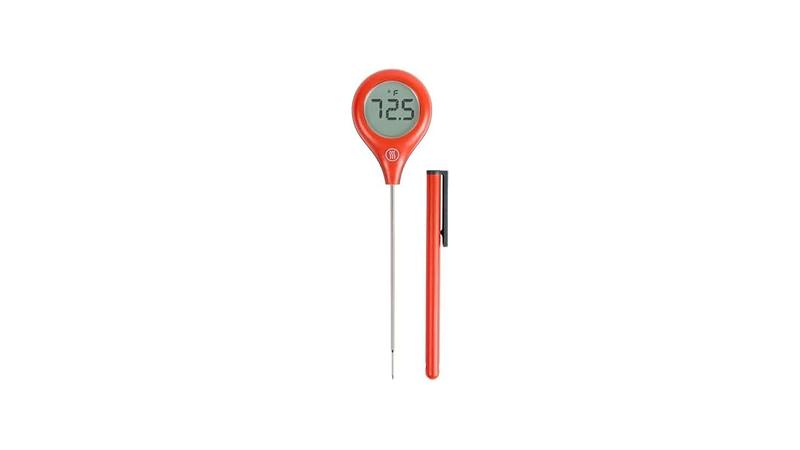
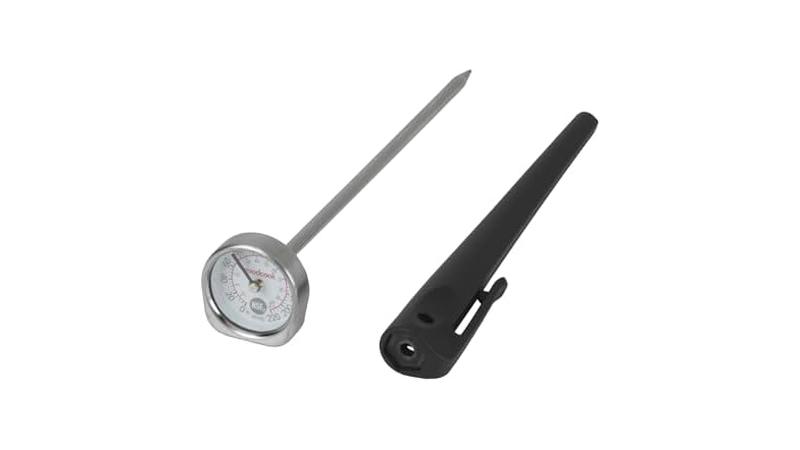
Digital instant-read thermometers provide results in two to three seconds. Dial thermometers take much longer and often lack precision for thin cuts like tenderloin. Brands like ThermoWorks and OXO make highly reliable models for home kitchens.
- Turn on your digital instant-read thermometer and wait for it to calibrate.
- Locate the thickest portion of the pork tenderloin visually.
- Insert the metal probe horizontally directly into the geometric center.
- Push the probe until the dimple mark on the shaft reaches the surface.
- Wait for the numbers on the display to stop climbing.
- Read the final temperature and remove the probe slowly.
- Wipe the probe clean with a damp cloth before storing it away.
Calibrating your thermometer occasionally ensures long-term accuracy. Fill a glass with ice water and submerge the probe. It should read exactly 32°F (0°C).
If it does not, adjust the calibration nut or replace the battery immediately.
Why Carryover Cooking Matters for Your Pork Tenderloin Internal Temperature Guide
Carryover cooking happens when meat continues to rise in temperature after you pull it off the heat source. Residual thermal energy moves from the hot exterior toward the cooler center. Ignoring this physics concept ruins countless pork dinners.
Your pork tenderloin internal temperature guide must account for this temperature jump. If you leave the tenderloin in the oven until the thermometer reads 145°F, it will climb to 150°F or higher while resting. That extra five degrees pushes the meat from juicy to dry.
To hit the perfect 145°F final temperature, remove the pork from the heat when the thermometer reads 140°F (60°C). During the three-minute rest, those five degrees will develop naturally. High-heat cooking methods like grilling cause more carryover than low-and-slow roasting.
| Pull Temperature | Rest Time | Final Temperature | Result |
|---|---|---|---|
| 135°F (57°C) | 5 minutes | 140°F (60°C) | Very pink, soft texture |
| 140°F (60°C) | 3 minutes | 145°F (63°C) | Perfect, juicy, slight pink |
| 145°F (63°C) | 3 minutes | 150°F (66°C) | Well done, starting to dry |
| 150°F (66°C) | 3 minutes | 155°F (68°C) | Overcooked, tough, chalky |
This chart shows exactly why pulling the meat early guarantees better results. Always plan for that final five-degree rise during the resting phase.
How Does Cooking Method Change the Target Temperature?
Different heat sources affect how quickly carryover cooking happens. A blazing hot grill transfers massive amounts of energy into the outer layer of the meat. An oven set to 350°F applies gentler, more even heat over a longer period.
Your pork tenderloin internal temperature guide strategy needs slight adjustments based on your chosen equipment. Pan-searing requires constant attention because cast iron holds extreme heat. Sous vide removes guesswork entirely by holding the water bath at your exact desired finish temperature.
According to America’s Test Kitchen, searing meat before roasting improves flavor without significantly altering the final internal temperature timeline. The National Pork Board reports that over 60% of home cooks still overcook pork due to outdated safety fears. Using the right method prevents this mistake.
- Oven Roasting (400°F): Pull at 140°F, rest uncovered for 3 minutes on a board.
- Gas or Charcoal Grill: Pull at 138°F because intense radiant heat causes faster carryover.
- Cast Iron Pan-Sear: Pull at 140°F, tent loosely with foil while resting.
- Sous Vide: Set water bath to exactly 145°F, no carryover math needed at all.
- Air Fryer: Pull at 139°F due to rapid circulating convection air currents.
- Smoker (225°F): Pull at 142°F because low ambient heat creates minimal carryover effect.
Warning: Never rely on cooking time alone to determine doneness. A one-pound tenderloin and a 1.5-pound tenderloin require vastly different timelines. Always trust your digital thermometer over the clock on your wall.
What Are the Best Thermometers for Tracking Pork Tenderloin?
Choosing the right tool makes following a pork tenderloin internal temperature guide effortless. Cheap dial thermometers found in grocery stores often drift out of calibration quickly. Investing twenty to thirty dollars in a quality digital model saves ruined dinners.
Instant-read thermometers are the gold standard for quick checks. You open the oven, insert the probe, read the number in three seconds, and close the door. This minimizes heat loss inside your cooking chamber.
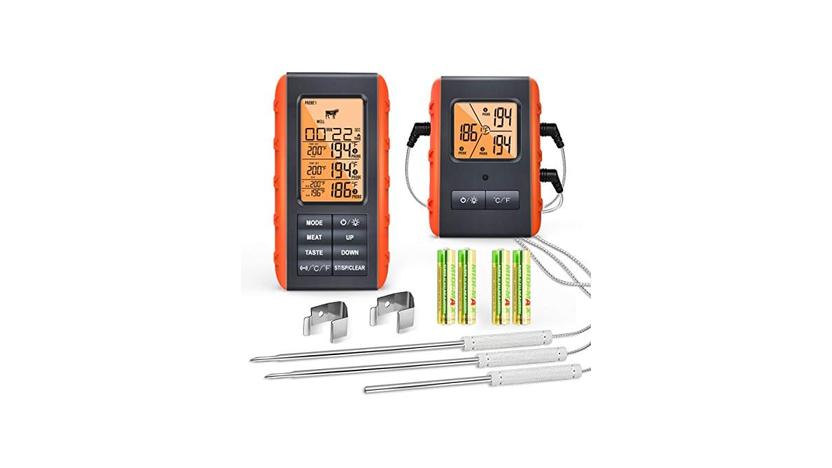
Leave-in probe thermometers work well but require careful placement so wires do not melt.
Consumer Reports tests show that digital thermocouple models offer the fastest response times available today. Thermapen remains the industry favorite among professional chefs globally. Budget options from ThermoPro deliver excellent accuracy for everyday home cooks.
| Thermometer Type | Speed | Accuracy | Best Use Case |
|---|---|---|---|
| Thermocouple (Instant-Read) | 2-3 seconds | ±0.5°F | Quick checks, grilling, searing |
| Thermistor (Digital Dial) | 6-10 seconds | ±1.0°F | Budget-friendly daily roasting |
| Leave-In Probe with Wire | Continuous | ±2.0°F | Oven roasting, smoking |
| Analog Bimetallic Dial | 15-20 seconds | ±3.0°F | Avoid for thin cuts entirely |
Stick to thermocouples or fast thermistors for pork tenderloin. The thin shape of the cut demands a tool that registers heat instantly before the meat cools down during testing.
How to Rest Pork Tenderloin After Reaching the Right Temperature
Resting meat allows muscle fibers to relax and reabsorb expelled moisture. When heat hits protein strands, they contract violently and squeeze out liquid. Taking the pork off the heat stops this contraction process gradually.
During the three-minute rest outlined in your pork tenderloin internal temperature guide, those squeezed juices redistribute evenly throughout the entire cut. Skipping this step causes all the flavorful liquid to pour out the moment your knife touches the crust. You end up with a wet board and dry meat.
Tenting the pork loosely with aluminum foil keeps the surface warm without trapping steam. Trapped steam ruins the beautiful brown crust you worked hard to build. Leave the foil slightly open at the edges to let excess moisture escape freely.
- Transfer the cooked tenderloin from the pan to a wooden cutting board immediately.
- Place a loose sheet of aluminum foil over the top without wrapping it tightly.
- Set a kitchen timer for exactly three full minutes.
- Do not poke, prod, or move the meat during this waiting period.
- Remove the foil once the timer goes off.
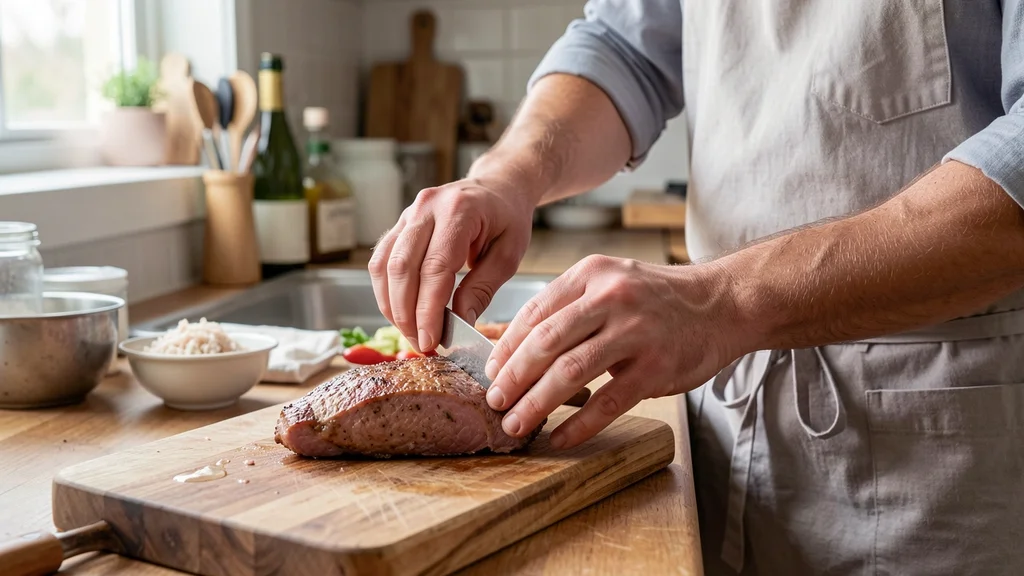
- Slice against the grain into half-inch thick medallions using a sharp chef knife.
- Serve immediately on warmed plates to maintain optimal eating temperature.
Tip: Warm your serving plates in the microwave for thirty seconds before plating. Hot food on cold plates drops in temperature rapidly, ruining the perfect finish you achieved by following proper resting guidelines.
Common Mistakes That Ruin Pork Tenderloin Temperature
Even experienced home cooks fall into traps that destroy this delicate cut. Pork tenderloin weighs barely one pound on average. Its small mass means it transitions from perfectly cooked to hopelessly overdone in less than sixty seconds.
The biggest error is ignoring the difference between pork loin and pork tenderloin. A pork loin roast weighs four to five pounds and requires hours of slow roasting. Applying loin timing to a tiny tenderloin guarantees charcoal-like results.
Always verify which specific cut your recipe actually calls for.
Failing to pat the meat dry before cooking creates another major issue. Surface moisture generates steam instead of allowing the Maillard reaction to form a savory crust. Steam lowers the effective cooking temperature around the meat drastically.
- Cooking straight from the refrigerator instead of letting it temper for twenty minutes.
- Using dull knives that tear the meat fibers rather than slicing cleanly.
- Leaving the silverskin membrane attached, which shrinks and curls the meat awkwardly.
- Relying on visual color cues instead of inserting a calibrated digital thermometer.
- Overcrowding the pan, which drops the oil temperature and prevents proper browning.
- Forgetting to account for carryover cooking when setting your target pull temperature.
According to Food Safety News, improper handling and undercooking remain concerns, but overcooking causes far more daily complaints. Trusting your tools over your instincts solves almost every problem listed above. Treat the thermometer as your ultimate authority in the kitchen.
What Does the Science Say About Pink Pork Safety?
Generations of cooks learned to fear any hint of pink inside pork. This fear originated from the risk of trichinosis, a parasitic disease caused by Trichinella spiralis. Modern farming practices have virtually eliminated this threat in commercially raised pigs.
The Centers for Disease Control and Prevention reports that trichinosis cases linked to commercial pork dropped to near zero over recent decades. The USDA officially lowered the recommended safe cooking temperature to 145°F back in 2011. This scientific update changed culinary standards permanently.
Pathogens like Salmonella and E. coli die rapidly when exposed to 145°F. Holding the meat at that temperature for three minutes during the rest phase provides an extra margin of safety.
Pasteurization relies on both heat intensity and duration working together simultaneously.
Your pork tenderloin internal temperature guide aligns perfectly with modern food science. Chefs worldwide now serve pork medium-rare to medium confidently. The slight pink hue indicates properly hydrated protein structures rather than dangerous raw meat.
- Trichinella parasites die instantly at 137°F (58°C).
- Salmonella bacteria undergo rapid destruction at 145°F (63°C).
- Three minutes of resting time completes the pasteurization cycle fully.
- Commercial pork production standards prevent parasite exposure effectively.
- Color is an unreliable indicator of safety compared to exact temperature readings.
- Myoglobin proteins retain pink color safely at 145°F without indicating rawness.
Important: Wild boar or pasture-raised heritage breeds might carry slightly higher risks than factory-farmed pork. If you source wild game, consider pulling the temperature at 150°F just to be absolutely certain of complete pathogen elimination.
How to Adjust Your Pork Tenderloin Internal Temperature Guide for Marinades
Acidic marinades containing citrus juice, vinegar, or yogurt begin denaturing proteins before heat ever touches the meat. This chemical process mimics cooking slightly. Marinated tenderloins often feel firmer faster than unseasoned ones placed in the same hot oven.
Sugar-heavy glazes like honey mustard or maple soy burn rapidly at high temperatures. If you use a sweet marinade, lower your oven heat by twenty-five degrees. Monitor the thermometer closely because the sticky exterior can trick your eyes into thinking the inside is finished.
Dry brining with kosher salt draws out moisture initially, then pulls seasoned liquid back deep into the muscle fibers. Salt alters protein structures to hold onto water better during heating. A dry-brined tenderloin forgives minor temperature overshoots far better than plain meat.
- Apply your dry rub or marinade at least two hours before cooking begins.
- Remove the pork from the refrigerator thirty minutes prior to hitting the heat.
- Pat sugary marinades completely dry if you plan to achieve a hard pan-sear first.
- Cook using your standard 140°F pull target regardless of seasoning choices.
- Check the temperature in multiple spots since uneven shapes cook irregularly.
- Rest normally for three minutes before slicing across the grain.
Seasonings enhance flavor but never replace the need for precise temperature tracking. Stick to the core numbers outlined in this pork tenderloin internal temperature guide no matter what spices you apply. Consistency in technique beats complexity in recipes every time.
Frequently Asked Questions
Can I eat pork tenderloin at 140°F without resting it?
Eating pork at 140°F without resting carries a slight safety risk. The USDA mandates 145°F specifically because the three-minute rest pushes the temperature up to kill remaining pathogens. Always pull at 140°F and let it rest to reach 145°F safely.
Why does my pork tenderloin look pink even at 150°F?
Certain cooking methods and curing agents keep myoglobin proteins pink at higher temperatures. Smoke rings from grilling also create permanent pink coloring near the surface. Trust your calibrated thermometer reading over visual color inspection every single time.
How long does it take to cook a one-pound pork tenderloin in the oven?
At 400°F, a standard one-pound tenderloin takes about twenty to twenty-five minutes total. However, oven variances make time-based cooking unreliable. Start checking the internal temperature with your probe at the fifteen-minute mark to prevent overcooking.
Should I tie my pork tenderloin before cooking it?
Tucking the thin tail end underneath the main body helps it cook evenly. Butchers twine works well to secure the fold. Creating a uniform cylinder prevents the skinny tip from drying out while the thick center reaches the target temperature.
Is sous vide the best way to follow a pork tenderloin internal temperature guide?
Sous vide offers unmatched precision because the water bath cannot exceed your set temperature. Setting the circulator to 145°F guarantees edge-to-edge perfection without carryover math. Finish with a quick sixty-second pan sear for crust development afterward.
Final Thoughts
Hitting 145°F transforms ordinary pork tenderloin into a spectacular dinner. Rely on a fast digital thermometer, account for carryover heat, and always rest the meat for three full minutes. Master this simple pork tenderloin internal temperature guide routine and you will never serve dry pork again.