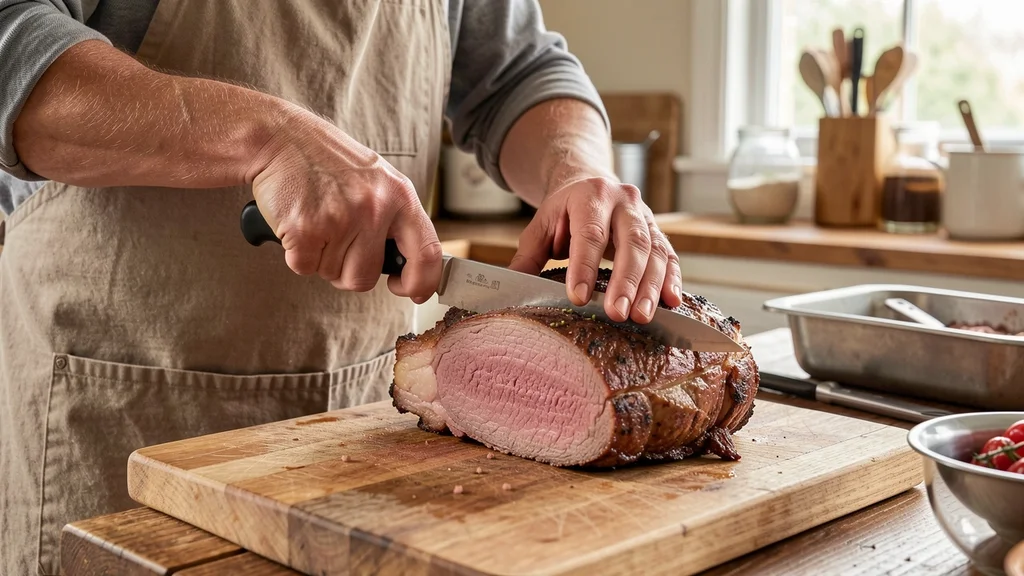
Pork roast internal temperature guide is the single most important tool you need to cook juicy, safe meat every time. Cooking pork used to mean drying it out until it turned gray and tough. Those days are over.
This pork roast internal temperature guide covers exact temperatures, resting times, and common mistakes so you never serve dry meat again. You will learn what the USDA recommends, how carryover cooking changes your final result, and which cuts need specific heat levels. Grab your meat thermometer and follow this pork roast internal temperature guide to get perfect results on your next dinner.
Simply put, the USDA recommends cooking whole cuts of pork to an internal temperature of 145°F followed by a three-minute rest. Ground pork requires 160°F. Always use a reliable digital meat thermometer inserted into the thickest part of the roast to ensure accuracy and food safety.
What Is the Safe Pork Roast Internal Temperature
The safe pork roast internal temperature depends entirely on the cut of meat you are cooking. The United States Department of Agriculture (USDA) updated its guidelines several years ago, lowering the recommended temperature for whole muscle cuts. This change means you can now enjoy pork that is slightly pink in the center while remaining completely safe to eat.
For whole cuts like tenderloin, loin, and shoulder, the target pork roast internal temperature is 145°F. You must let the meat rest for at least three minutes after pulling it from the heat. During this rest period, the temperature stays steady or rises slightly, destroying any harmful pathogens.
Ground pork is a different story. Because the grinding process mixes surface bacteria throughout the meat, you must cook ground pork to 160°F. There is no rest time required for ground meat, but hitting that higher number is non-negotiable for safety.
- Whole muscle cuts (loin, tenderloin): 145°F with a 3-minute rest
- Ground pork (sausages, burgers): 160°F with no rest required
- Pre-cooked ham (reheating): 140°F
- Fresh raw ham: 145°F with a 3-minute rest
- Pork ribs and shoulder for shredding: 195°F to 205°F for collagen breakdown
- Organ meats (liver, heart): 160°F minimum
According to the National Pork Board, consumer confidence in eating medium-rare pork has increased significantly since the USDA lowered the recommendation. Food safety experts confirm that cooking whole cuts to 145°F effectively eliminates trichinosis risks, which were historically the main concern with undercooked pork.
| Pork Cut Type | Target Temperature | Rest Time |
|---|---|---|
| Pork Loin Roast | 145°F | 3 Minutes |
| Pork Tenderloin | 145°F | 3 Minutes |
| Ground Pork | 160°F | None |
| Pork Shoulder (Pulled) | 195°F – 205°F | 15-20 Minutes |
| Fresh Ham | 145°F | 3 Minutes |
This table gives you a quick reference for every major cut. Keep it handy whenever you plan a pork dinner.
How to Measure Pork Roast Internal Temperature Correctly
Getting the right number on your thermometer requires proper technique. A reading taken from the wrong spot will give you false information, leading to either overcooked or unsafe meat. Your pork roast internal temperature guide is only as good as your measuring method.
Always insert the probe into the thickest part of the roast. Avoid touching bone, fat pockets, or the roasting pan. Bone conducts heat faster than muscle tissue, giving you an artificially high reading.
Fat insulates the probe and gives you an artificially low reading. Neither scenario helps you cook better meat.
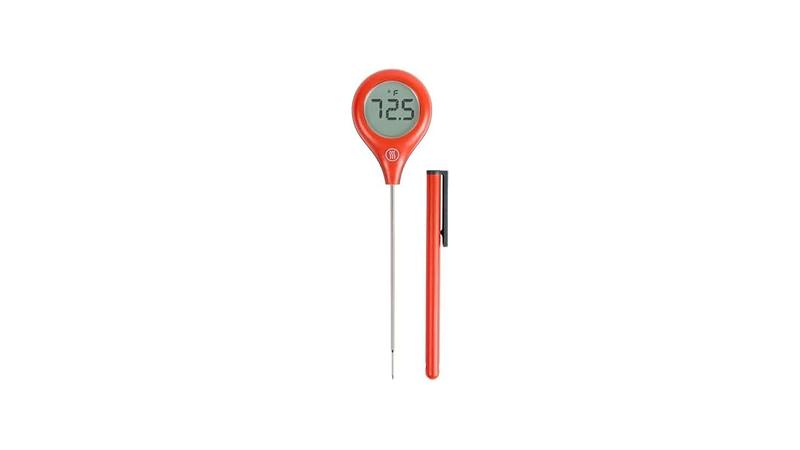
Digital instant-read thermometers are the best tools for this job. Dial thermometers take too long to register and often lack precision. Brands like ThermoWorks and Lavatools make reliable models that read temperatures in two to three seconds.
The Food and Drug Administration (FDA) recognizes accurate thermometry as a critical control point in food safety.
- Turn on your digital thermometer and wait for it to calibrate to zero.
- Locate the thickest center point of the pork roast visually.
- Insert the probe tip at least halfway into the meat without piercing through the other side.
- Wait for the numbers to stabilize, usually about three seconds for quality models.
- Read the display and compare it against your target temperature.
- Remove the probe and check a second location if the first reading seems unusually high or low.
- Clean the probe with hot soapy water before storing it.
Tip: Calibrate your thermometer once a month using the ice water method. Fill a glass with crushed ice and water, insert the probe, and it should read exactly 32°F. Adjust the calibration nut or settings if it drifts.
Taking multiple readings ensures consistency. If one spot reads 140°F and another reads 150°F, your roast needs more time to even out or you hit a pocket of fat. Trust the lowest reading when deciding if the meat is done.
Why Carryover Cooking Matters for Pork Roasts
Carryover cooking is the phenomenon where meat continues to rise in temperature after you remove it from the oven or grill. The outer layers hold intense heat that slowly migrates toward the cooler center. Ignoring this process is the fastest way to ruin a perfectly cooked pork roast.
A large pork loin roast can increase by 5°F to 10°F during its rest period. Smaller cuts like tenderloins might only rise 3°F to 5°F. If your target is 145°F, you need to pull the meat from the heat source when the thermometer reads between 135°F and 140°F.
Letting it sit tented loosely with foil allows the heat to distribute evenly without trapping too much steam.
The size and shape of your roast dictate how much carryover cooking occurs. A thick, round roast retains more residual heat than a thin, flat piece of meat. Cooking methods also play a role.
High-heat roasting creates a larger temperature differential between the crust and the center, resulting in more carryover. Low-and-slow smoking produces less carryover because the entire piece of meat reaches a uniform temperature gradually.
- Large roasts (over 3 pounds) experience 5°F to 10°F of temperature rise.
- Small roasts (under 2 pounds) experience 3°F to 5°F of temperature rise.
- High-heat ovens (400°F+) create more carryover than low-heat smokers (225°F).
- Tenting with foil speeds up the internal temperature rise slightly.
- Leaving meat uncovered slows the rise but keeps the crust crispy.
- Resting on a cold cutting board draws heat away faster than resting on a warm platter.
According to America’s Test Kitchen, failing to account for carryover cooking is the primary reason home cooks end up with dry pork. Their research shows that pulling a loin at 140°F and resting it yields a juicier final product than cooking it straight to 145°F in the oven.
Warning: Never slice into a pork roast immediately after taking it out of the oven. Cutting the meat releases trapped juices onto the cutting board instead of letting them redistribute through the muscle fibers. Always wait the full rest time.
Best Temperatures for Different Pork Roast Cuts
Not all pork roasts are created equal. A lean tenderloin demands a completely different approach than a fatty Boston butt. Knowing the ideal pork roast internal temperature for each specific cut guarantees the best texture and flavor profile.
Pork loin and tenderloin are very lean. They have almost no intramuscular fat to keep them moist during cooking. You must pull these cuts exactly at 145°F after resting.
Going even five degrees higher turns them chalky and dry. Searing them quickly on the stove before finishing in a moderate oven helps build flavor without overcooking the center.
Pork shoulder, also known as Boston butt, contains heavy amounts of connective tissue and collagen. Cooking this cut to 145°F leaves it incredibly tough and chewy. You need to push the internal temperature to 195°F or even 205°F.
At these high temperatures, the collagen melts into gelatin, transforming the tough muscle into tender, shreddable pulled pork. This process takes hours at low temperatures.
Fresh ham comes from the rear leg of the pig. It behaves similarly to a loin but requires longer cooking times due to its density. Target 145°F for sliced ham.
If you want fall-apart tenderness, treat it like a shoulder and cook it past 190°F.
| Cut of Pork | Ideal Final Temp | Pull From Heat At | Texture Goal |
|---|---|---|---|
| Tenderloin | 145°F | 138°F – 140°F | Juicy, slightly pink center |
| Center Loin | 145°F | 138°F – 140°F | Firm but moist |
| Boston Butt | 200°F | 195°F | Shreddable, gelatinous |
| Picnic Shoulder | 195°F | 190°F | Tender chunks |
| Spareribs | 195°F – 203°F | 190°F | Bite-through tender |
Use this chart as your primary reference when planning your cook. Matching the target temperature to the specific cut prevents both food safety issues and ruined dinners.
Common Mistakes When Checking Pork Roast Temperature
Even experienced home cooks make errors when monitoring meat temperatures. These mistakes compromise both safety and quality. Fixing them requires attention to detail and the right equipment.
Relying on cooking time instead of temperature is the biggest error. Recipes often state “cook for 20 minutes per pound,” but ovens vary wildly in actual output. A roast starting at room temperature cooks much faster than one pulled directly from the refrigerator.
Only a thermometer tells you the truth about doneness.
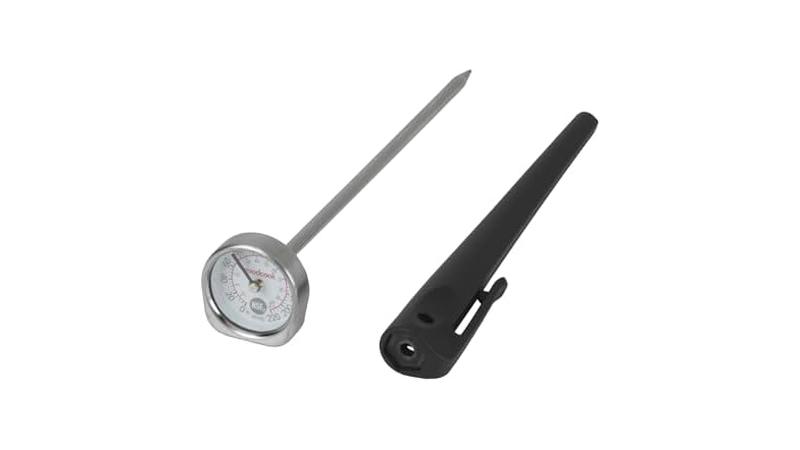
Using a dull or cheap dial thermometer causes inaccurate readings. The bi-metallic coils inside analog dials degrade over time and respond slowly. By the time the needle settles, you might have left the probe in too long or misjudged the heat.
Switch to a digital instant-read model to eliminate this problem.
Checking the temperature too frequently is another issue. Every time you open the oven door, you lose up to 25°F of ambient heat. This extends your cooking time and dries out the exterior of the meat.
Wait until you are close to the estimated finish time before opening the door to check.
- Trusting visual cues like clear juices instead of using a thermometer.
- Touching bone with the probe tip, which registers falsely high temperatures.
- Skipping the resting phase because the meat looks ready to eat.
- Using the same thermometer for raw and cooked meat without cleaning it.
- Ignoring the difference between loin cuts and shoulder cuts regarding target heat.
- Failing to calibrate the thermometer regularly against ice water or boiling water.
Important: The color of pork juices is not a reliable indicator of safety. Meat chemistry dictates that myoglobin can remain pink even at safe temperatures, especially if the pig was fed certain diets or if curing agents were present. Always trust the number on your thermometer.
Avoiding these errors transforms your cooking process. You waste less meat, spend less time hovering over the oven, and serve consistently excellent dishes to your family.
How Does Oven Temperature Affect the Final Result
The ambient heat of your oven dictates how fast the outside of the roast cooks compared to the inside. High heat creates a thick crust quickly but leaves the center raw if you pull it early. Low heat cooks the meat evenly from edge to edge but fails to develop a flavorful sear.
For lean cuts like pork loin, a two-stage approach works best. Start the oven at 450°F for fifteen minutes to build a brown crust through the Maillard reaction. Then drop the temperature to 325°F for the remainder of the cook.
This method minimizes the gray band of overcooked meat just beneath the surface while keeping the center juicy.
Fatty cuts like pork shoulder thrive at low temperatures. Smoking or roasting at 225°F to 275°F gives the collagen enough time to break down into gelatin. Rushing a pork shoulder at 400°F burns the outside long before the internal structure softens.
Patience is mandatory for tough cuts.
- Preheat your oven fully before inserting the meat to ensure consistent ambient heat.
- Use an oven thermometer to verify your appliance runs true to the dial setting.
- Sear lean roasts at high heat first, then reduce the temperature to finish gently.
- Cook fatty roasts low and slow to render fat and melt connective tissue.
- Avoid opening the oven door more than once or twice during the entire process.
- Use convection settings carefully, as fans accelerate cooking and increase carryover heat.
The National Center for Home Food Preservation notes that maintaining steady oven temperatures reduces the risk of bacterial survival in the danger zone between 40°F and 140°F. Fluctuating heat forces meat to linger in this unsafe range longer than necessary.
Matching your oven strategy to the specific cut ensures your pork roast internal temperature guide delivers predictable, restaurant-quality results every single time you cook.
How to Rest a Pork Roast After Cooking
Resting is not optional. It is the final step in the cooking process. When muscle fibers heat up, they contract and squeeze moisture toward the center of the roast.
If you slice immediately, that pressurized juice floods your cutting board. Resting allows the fibers to relax and reabsorb the liquid evenly.
Transfer the roast to a warm platter or a wire rack set over a baking sheet. A wire rack prevents the bottom from steaming in its own juices, preserving any crust you worked hard to build. Tent the meat loosely with aluminum foil.
Do not wrap it tightly, as trapped steam softens the exterior and ruins the texture.
The duration of the rest depends on the size of the roast. Small tenderloins need five to ten minutes. Large center-cut loins require fifteen to twenty minutes.
Massive smoked shoulders benefit from resting in an insulated cooler for up to two hours, allowing the gelatin to set properly.
- Move the meat to a room-temperature or slightly warmed serving platter.
- Place a wire rack underneath if the roast has a crispy crust you want to protect.
- Drape aluminum foil loosely over the top like a tent.
- Set a timer for at least three minutes for small cuts or fifteen minutes for large ones.
- Resist the urge to poke, prod, or slice the meat during this waiting period.
- Collect any juices that drip onto the platter to pour back over the sliced meat later.
- Keep the resting meat away from cold drafts or air conditioning vents.
Chef J. Kenji Lopez-Alt demonstrated through extensive testing that rested meat retains up to 60% more juice than meat sliced immediately off the heat. This single habit separates amateur cooks from professionals.
Tip: If you are worried about the meat getting cold during a long rest, warm your serving platter in the oven at 170°F for a few minutes before placing the roast on it. Turn the oven off before inserting the platter.
Tools You Need to Follow This Pork Roast Internal Temperature Guide
You cannot execute a proper pork roast internal temperature guide without the right equipment. Guesswork leads to foodborne illness or ruined expensive cuts of meat. Investing in a few basic tools pays for itself after one successful dinner.
A digital instant-read thermometer is mandatory. Look for models with a response time under four seconds and a temperature range spanning from -40°F to 572°F. Splash resistance makes cleanup easier.
Brands like ThermoWorks Thermapen or the more budget-friendly ThermoPop offer exceptional accuracy trusted by professional kitchens worldwide.
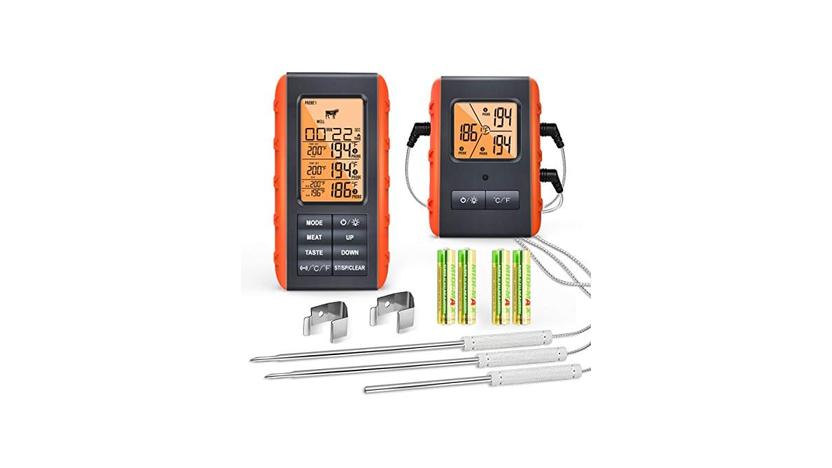
Leave-in probe thermometers serve a different purpose. These devices feature a cable attached to a probe that stays inside the meat while it cooks. The cable connects to a base unit outside the oven that alarms when your target temperature hits.
This setup eliminates the need to open the oven door repeatedly.
Wireless Bluetooth or Wi-Fi thermometers take convenience further. Devices like the MEATER Plus transmit data directly to your smartphone. You can monitor your cook from the living room or the backyard.
They track both internal meat temperature and ambient oven temperature simultaneously.
| Tool Type | Best Use Case | Pros | Cons |
|---|---|---|---|
| Instant-Read Digital | Quick checks on any cut | Fast, highly accurate, portable | Requires opening the oven manually |
| Leave-In Probe | Long roasts and smoking | Continuous monitoring, alarm feature | Cables can get tangled or melt |
| Wireless Smart | Remote monitoring via phone | App alerts, tracks ambient temp | Higher cost, needs charging |
| Analog Dial | Emergency backup only | No batteries required | Slow, inaccurate, hard to read |
Choose the tool that fits your cooking style. For most home cooks, a fast instant-read thermometer combined with a basic leave-in probe covers every scenario perfectly.
Frequently Asked Questions
Is pork safe to eat if it is slightly pink in the middle?
Yes. The USDA confirms that whole cuts of pork cooked to 145°F and rested for three minutes are completely safe, even if the center retains a slight pink hue. Color is not a reliable indicator of doneness.
Only a calibrated thermometer can verify that the meat has reached a safe internal temperature.
Can I cook a pork roast to 160°F if I prefer well-done meat?
You can cook pork to 160°F, but expect the texture to be noticeably drier and firmer. Lean cuts like loin and tenderloin lose significant moisture past 145°F. If you strongly prefer well-done meat, choose fattier cuts like shoulder or ribs, which tolerate higher temperatures better due to their collagen content.
How do I know if my meat thermometer is accurate?
Test your thermometer using the ice bath method. Fill a glass with crushed ice and cold water, stir it, and insert the probe without touching the sides or bottom. It should read exactly 32°F.
If it deviates, adjust the calibration setting according to the manufacturer’s instructions before cooking your pork.
Does the bone affect the internal temperature reading of a pork roast?
Bone conducts heat differently than muscle tissue. If your thermometer probe touches the bone, you will get a falsely elevated reading that does not represent the actual doneness of the surrounding meat. Always aim the probe tip into the center of the thickest muscle mass, keeping it at least half an inch away from any bones.
What happens if I forget to let the pork roast rest?
Skipping the rest period causes the pressurized juices inside the hot muscle fibers to spill out immediately upon slicing. You lose a significant amount of moisture to the cutting board, resulting in dry, chewy meat. Resting allows the fibers to relax and reabsorb those juices, ensuring every bite remains tender and flavorful.
Final Thoughts
Following a reliable pork roast internal temperature guide removes the guesswork from cooking meat. Pull lean cuts at 140°F, rest them properly, and always trust your digital thermometer over visual cues. Apply these principles consistently to serve juicy, safe, and perfectly cooked pork every single time.