Whole Turkey Temperature Guide knowledge is the single most important factor in cooking a safe and delicious bird. Getting the internal temperature right prevents foodborne illness and stops you from serving dry, overcooked meat. This post covers everything you need to know about checking temperatures, target readings for different parts of the turkey, and resting times.
Whether you roast, smoke, or deep fry your bird, following a reliable whole turkey temperature guide ensures juicy results every time. Stop guessing and start using a meat thermometer to guarantee your holiday meal is both safe and perfectly cooked.
Simply put, a whole turkey is safe to eat when the thickest part of the thigh reaches 165°F. Always use a calibrated meat thermometer inserted into the breast, thigh, and wing joint to verify doneness without relying on visual cues like clear juices or golden skin.
What Is the Safe Internal Temperature for a Whole Turkey
The United States Department of Agriculture sets strict standards for poultry safety. According to the USDA, all poultry must reach a minimum internal temperature of 165°F to destroy harmful bacteria like Salmonella and Campylobacter. This rule applies to every part of the bird, making a proper whole turkey temperature guide essential for home cooks.
Many older cookbooks suggest pulling the turkey at 180°F. That outdated advice leads to incredibly dry white meat. Modern food science proves that 165°F is the exact threshold where pathogens die instantly.
You do not need to push the temperature higher just to be safe.
You must check multiple spots because a turkey cooks unevenly. The dark meat in the thighs takes longer to cook than the lean white meat in the breast. Relying on a single reading can leave dangerous cold spots hidden inside the bird.
- Breast meat should reach exactly 165°F for optimal juiciness.
- Thigh meat needs to hit 165°F minimum but tastes better closer to 175°F.
- The wing joint must also register at least 165°F to ensure safety.
- Any stuffing inside the cavity must independently reach 165°F.
- Never touch bone with the thermometer probe as it gives false high readings.
- Check both the left and right sides of the bird for consistency.
Warning: Never rely on pop-up thermometers built into commercial turkeys. The National Turkey Federation reports these devices often trigger at temperatures well above 180°F, resulting in severely overcooked and dry breast meat. Always use your own calibrated instant-read thermometer.
How to Use a Meat Thermometer Correctly on Turkey
A thermometer only works if you place it correctly. Inserting the probe into fat, gristle, or against a bone will give you inaccurate numbers. Learning proper placement is the core skill taught in any reliable whole turkey temperature guide.
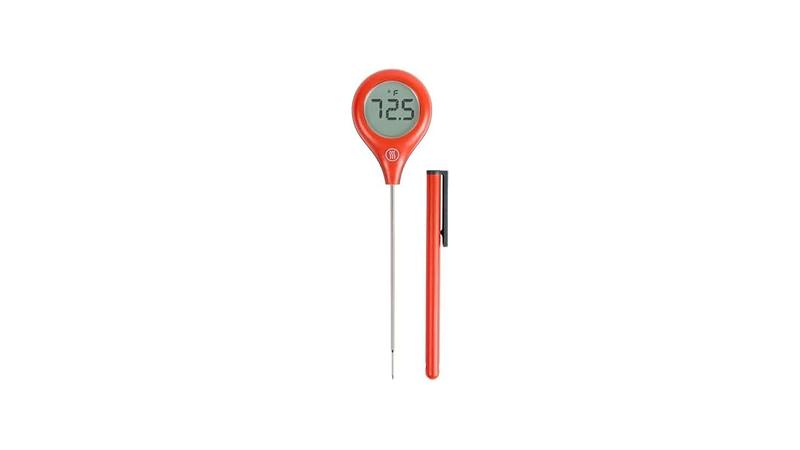
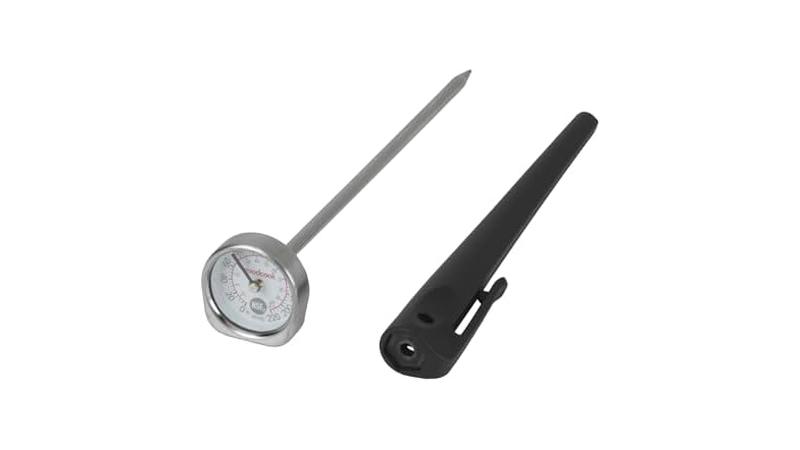
Use a digital instant-read thermometer for the fastest and most accurate results. Dial thermometers take much longer to stabilize and are notoriously difficult to read through a hot oven door. Brands like ThermoWorks and OXO make excellent models favored by professional chefs.
You should check the temperature toward the end of the estimated cooking time. Do not open the oven door constantly. Every time you open the door, the oven loses up to 50°F of heat, extending your total cooking time significantly.
- Insert the probe into the thickest part of the breast, angling it slightly downward.
- Push the thermometer deep into the innermost part of the thigh, avoiding the femur bone.
- Check the wing joint by inserting the probe between the drumette and the flat.
- Read the digital display and wait for the numbers to stop changing.
- Wipe the probe clean with a sanitizing cloth between each insertion point.
- Record the lowest temperature reading to determine if the bird needs more time.
| Thermometer Type | Response Time | Accuracy |
|---|---|---|
| Digital Instant-Read | 2 to 3 seconds | Highly accurate |
| Dial Bimetallic | 15 to 20 seconds | Moderate accuracy |
| Pop-Up Timer | Instant trigger | Very unreliable |
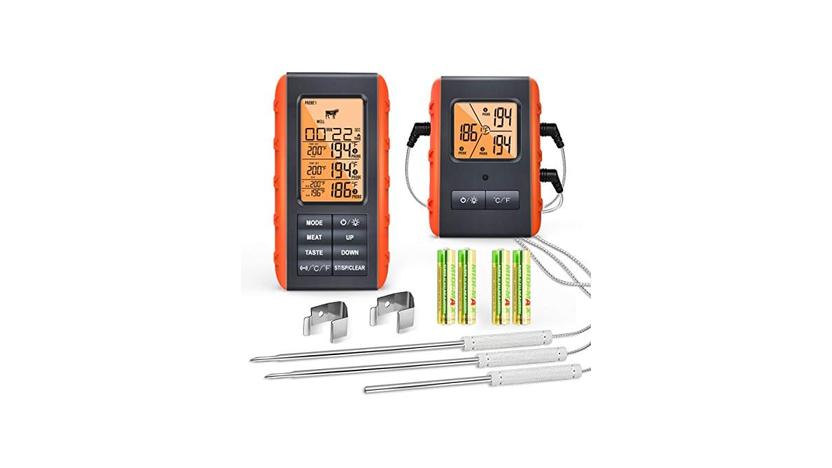
| Leave-In Probe | Continuous monitoring | Highly accurate |
Digital instant-read thermometers remain the best choice for home cooks. Leave-in probes are great for smokers but require careful wire routing to prevent melting inside standard ovens.
Why Dark Meat and White Meat Need Different Temperatures
Turkey breasts consist of lean white muscle fibers that dry out rapidly past 165°F. The thighs and drumsticks contain dark meat rich in connective tissue and collagen. These two distinct muscle types react completely differently to heat application.
Collagen in dark meat begins breaking down into gelatin around 160°F, but the process finishes much better at higher temperatures. If you pull a turkey the second the thigh hits 165°F, the dark meat might taste slightly rubbery. Pushing the thigh temperature to 175°F yields tender, fall-off-the-bone results.
This difference creates a major challenge for anyone roasting a whole bird. You want the breast to stay at 165°F while pushing the thighs closer to 175°F. Managing this gap requires specific techniques that every good whole turkey temperature guide must address.
- White meat dries out quickly because it lacks the fat found in dark meat.
- Dark meat contains myoglobin which requires more heat to break down properly.
- Cooking the bird breast-side down for the first hour shields the white meat.
- Tenting aluminum foil over the breast slows down its cooking rate.
- Spreading compound butter under the breast skin adds moisture and insulation.
- Spatchcocking the bird flattens it so both sections cook at a similar rate.
| Meat Section | Safe Minimum | Ideal Target | Texture Result |
|---|---|---|---|
| Breast (White) | 165°F | 160°F to 165°F | Juicy and tender |
| Thigh (Dark) | 165°F | 175°F to 180°F | Soft and shreddable |
| Drumstick | 165°F | 175°F to 180°F | Pulls away from bone |
| Wing Joint | 165°F | 165°F to 170°F | Firm but moist |
This table shows why a single target number does not work for the entire bird. Treat the white and dark sections as two separate cuts of meat sharing one skeleton.
How Does Carryover Cooking Affect Your Turkey
Carryover cooking happens because the outer layers of the meat are hotter than the center. When you remove the turkey from the oven, that trapped heat continues migrating inward. The internal temperature keeps rising even though the heat source is gone.
A large turkey retains massive amounts of thermal energy. Consumer Reports notes that a 20-pound bird can see its internal temperature rise by 10°F to 15°F during the resting phase. Smaller birds experience less carryover heat, usually jumping about 5°F to 10°F.
If you wait until the thermometer reads exactly 165°F in the breast before removing the turkey, carryover cooking will push it to 175°F or higher. That results in dry, chalky white meat. You must account for this temperature jump when planning your removal time.
- Pull the turkey out of the oven when the breast reads 155°F to 160°F.
- Ensure the thigh reads at least 165°F before removing the bird.
- Tent the turkey loosely with aluminum foil to trap some ambient heat.
- Let the bird rest undisturbed on the counter for 30 to 45 minutes.
- Monitor the temperature occasionally to confirm it safely crosses 165°F.
- Do not slice the turkey early or all the juices will run out onto the board.
Tip: To maximize carryover cooking benefits, pull your turkey when the deepest part of the breast hits 158°F. The residual heat will gently coast the temperature up to the USDA-recommended 165°F while keeping the meat incredibly juicy and tender.
What Are the Best Oven Settings for Even Heating
Oven temperature dictates how evenly your turkey cooks from edge to center. Blasting the bird at 450°F will burn the skin before the interior reaches safe temperatures. Cooking too low at 250°F keeps the meat in the bacterial danger zone for far too long.
Most culinary experts recommend starting at a high temperature to crisp the skin, then dropping the heat for the remainder of the cook. This two-stage method provides the best balance of texture and food safety. It forms the backbone of many professional kitchen routines.
Convection ovens circulate hot air using a built-in fan. This speeds up cooking by roughly 25 percent compared to standard conventional ovens. If you use convection, you must lower the temperature by 25°F or reduce the overall cooking time to prevent drying out the meat.
- Start the oven at 425°F for the first 30 minutes to brown the skin.
- Reduce the heat to 325°F for the remaining cooking duration.
- Lower convection oven settings to 300°F after the initial browning phase.
- Place the roasting pan on the lowest rack position to protect the breast.
- Avoid opening the oven door more than once per hour to maintain steady heat.
- Rotate the roasting pan halfway through if your oven has known hot spots.
| Turkey Weight | Unstuffed Time at 325°F | Stuffed Time at 325°F |
|---|---|---|
| 8 to 12 pounds | 2.5 to 3 hours | 3 to 3.5 hours |
| 12 to 16 pounds | 3 to 3.5 hours | 3.5 to 4 hours |
| 16 to 20 pounds | 3.5 to 4.5 hours | 4.5 to 5 hours |
| 20 to 24 pounds | 4.5 to 5 hours | 5 to 5.5 hours |
These timelines serve as estimates only. Your actual cooking time depends entirely on reaching the correct internal temperatures outlined in this whole turkey temperature guide. Always trust your thermometer over the clock.
How to Adjust Temperatures for Smoking and Deep Frying
Roasting in an oven is not the only way to cook a turkey. Smoking and deep frying are incredibly popular methods that require entirely different temperature management strategies. Ignoring these differences can lead to unsafe food or ruined meals.
Smoking uses low indirect heat over a long period. You typically set your smoker between 225°F and 275°F. Because the cooking environment is cooler, the turkey spends more time in the danger zone.
You must ensure the bird passes through 40°F to 140°F within four hours to meet food safety guidelines.
Deep frying submerges the turkey in 350°F peanut or canola oil. This aggressive heat cooks the bird very fast, usually taking just three to four minutes per pound. The exterior crisps immediately while the interior steams.
Temperature control here means managing the oil rather than the oven dial.
- For smoking, maintain a consistent chamber temperature of 250°F throughout the cook.
- Use fruit woods like apple or cherry to avoid bitter flavors on poultry.
- Check the internal temperature after three hours to ensure safe progression.
- For deep frying, heat the oil to exactly 350°F before lowering the bird.
- Turn off the burner completely before lowering the turkey to prevent oil flare-ups.
- Fry for three minutes per pound, then check the internal temperature immediately.
Important: Never stuff a turkey that you plan to deep fry or smoke. Stuffing insulates the interior cavity, preventing the center from reaching 165°F before the outside burns or overcooks. Cook your stuffing separately in a baking dish instead.
Common Mistakes People Make When Checking Turkey Temps
Even experienced home cooks make errors when monitoring poultry temperatures. A small mistake can result in an undercooked hazard or a dried-out disappointment. Knowing what to avoid saves your holiday dinner from disaster.
The most frequent error involves touching bone with the thermometer probe. Bones conduct heat faster than muscle tissue. If your probe rests against the femur or breastbone, the thermometer will display a falsely high reading.
You might pull the turkey out thinking it is done when the surrounding meat remains dangerously raw.
Another common issue is failing to calibrate the thermometer. Over time, digital sensors drift out of alignment. Testing your thermometer in a glass of ice water ensures it reads exactly 32°F before you start cooking.
Skipping this simple step compromises every reading you take afterward.
- Checking the temperature only once in a single location instead of multiple spots.
- Opening the oven too frequently and causing massive temperature fluctuations.
- Ignoring the stuffing temperature and assuming it heats at the same rate as meat.
- Pulling the bird out too early because the skin looks perfectly browned.
- Using a cheap grocery store pop-up timer instead of a reliable digital tool.
- Forgetting to let the meat rest, causing all the juices to bleed out during carving.
- Relying on cooking time charts exclusively without verifying with a thermometer.
Avoiding these pitfalls guarantees your efforts follow a proper whole turkey temperature guide accurately. Take your time, double-check your readings, and always prioritize food safety over visual appearance.
How Long Should You Rest a Turkey Before Carving
Resting is not optional. It is a mandatory step that allows the muscle fibers to relax and reabsorb their natural juices. If you carve a turkey straight out of the oven, those juices will flood the cutting board, leaving the meat dry and stringy.
The ideal resting time depends on the size of your bird. A standard 12 to 15-pound turkey needs about 30 to 45 minutes of rest. Larger birds weighing over 20 pounds benefit from a full 45 to 60 minutes.
During this window, carryover cooking finishes the job safely.
You should tent the turkey loosely with aluminum foil. Do not wrap it tightly. Tight wrapping traps steam, which turns your carefully crisped skin soft and soggy.
A loose tent retains enough heat for carryover cooking without ruining the exterior texture.
- Transfer the cooked turkey from the roasting pan to a sturdy cutting board.
- Create a loose tent using a large sheet of heavy-duty aluminum foil.
- Set a timer for 30 minutes minimum before touching the bird again.
- Use the resting time to prepare your gravy from the pan drippings.
- Check the final internal temperature after resting to confirm it stayed above 165°F.
- Carve the bird using a sharp slicing knife rather than a serrated bread knife.
Tip: Warm your serving platter in the oven at 170°F while the turkey rests. Transferring carved meat to a cold plate drops the temperature rapidly. A warm platter keeps your slices hot for your guests without requiring microwave reheating.
Frequently Asked Questions
Where exactly should I insert the thermometer in a turkey?
Insert the thermometer probe into the thickest part of the inner thigh, making sure it does not touch the bone. You must also check the thickest part of the breast and the wing joint. Taking readings in all three locations ensures the entire bird has reached a safe temperature.
Is it safe to eat turkey if the juices run clear?
No, clear juices are not a reliable indicator of food safety. The color of turkey juices changes based on myoglobin levels and cooking methods, not just temperature. You must use a calibrated meat thermometer to verify the internal temperature has reached at least 165°F before consuming the meat.
Can I cook a frozen turkey safely in the oven?
Yes, you can roast a frozen turkey, but it takes about 50 percent longer than a fully thawed bird. You must still ensure every part of the meat reaches 165°F internally. Remove the giblet packet as soon as the cavity thaws enough to allow access during the cooking process.
Does stuffing the turkey change the required cooking temperature?
The safe internal temperature for the meat remains 165°F regardless of whether you stuff the bird. However, the stuffing itself must also independently reach 165°F in the center of the cavity. Stuffed turkeys take significantly longer to cook, which often results in overcooked and dry breast meat.
Why did my turkey turn out dry even though I followed the temperature guide?
Dry turkey usually results from failing to account for carryover cooking or skipping the resting phase. If you leave the bird in the oven until the breast reads 165°F, it will rise to 175°F while resting, drying out the white meat. Pull the turkey at 158°F and let residual heat finish the cooking process.
Final Thoughts
Following a reliable whole turkey temperature guide removes the guesswork from roasting poultry. Always target 165°F in the breast and 175°F in the thighs using a quality digital thermometer. Master these temperature checks, respect the resting phase, and you will serve a perfectly juicy, safe bird every single time.