Ground beef internal temperature: safe temperature guide is the most critical factor in preventing foodborne illness at home. Cooking ground meat properly protects you and your family from dangerous bacteria like E. coli and Salmonella.
This post covers exactly what temperature your ground beef needs to reach, how to measure it correctly, and why guessing never works. You will learn the science behind safe cooking temperatures, the best tools for the job, and practical tips for every cooking method. Getting this right means safer meals and better-tasting burgers, meatballs, and tacos.
Follow these steps to cook with confidence every single time you handle raw ground beef in your kitchen.
Simply put, the safe ground beef internal temperature is 160°F (71°C). Always use a calibrated meat thermometer inserted into the thickest part of the meat to verify this reading before serving any ground beef dish.
What Is the Safe Ground Beef Internal Temperature
The USDA sets the minimum safe ground beef internal temperature: safe temperature guide standard at 160°F (71°C). At this specific heat level, harmful pathogens die off rapidly. You cannot rely on the color of the meat to determine if it is fully cooked.
Browning happens through the Maillard reaction, which occurs at different rates depending on the pH and fat content of the meat. Some ground beef turns brown well before reaching 160°F, while other batches stay pink even after hitting the safe zone. A thermometer is your only reliable tool.
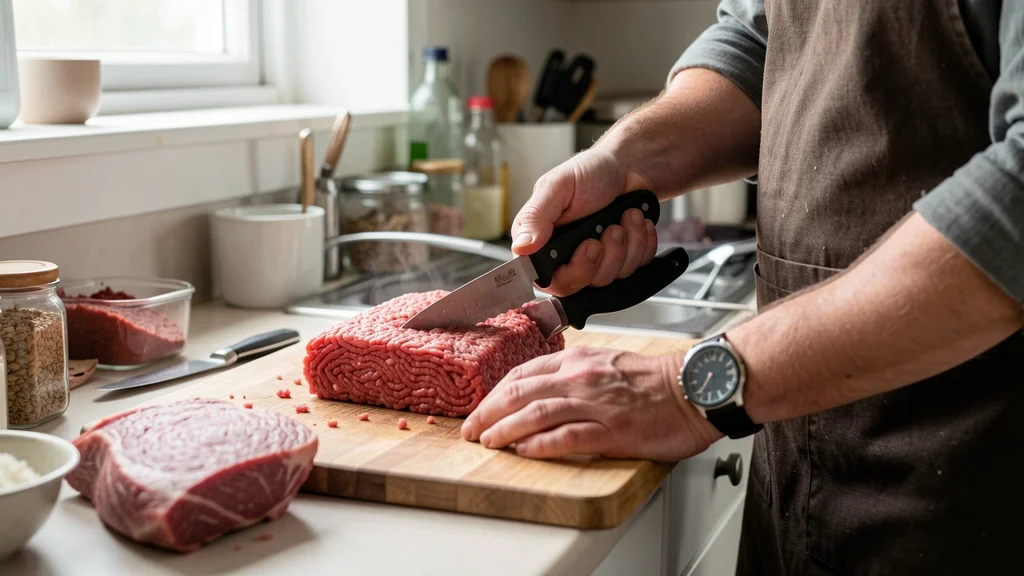
Unlike whole cuts of steak where bacteria stay on the surface, grinding meat mixes surface bacteria throughout the entire batch. This makes reaching the proper core temperature absolutely essential for safety.
- Minimum safe temperature: 160°F (71°C)
- Resting does not significantly raise the temperature of thin patties
- Color is never a reliable indicator of doneness
- Bacteria spread throughout the meat during the grinding process
- Both fresh and frozen ground beef require the same final temperature
- Commercial kitchens follow the exact same 160°F rule
| Meat Type | Safe Minimum Temperature |
|---|---|
| Ground Beef | 160°F (71°C) |
| Whole Beef Steak | 145°F (63°C) + 3 min rest |
| Ground Poultry | 165°F (74°C) |
| Ground Pork | 160°F (71°C) |
This table shows why you must treat ground meats differently than whole muscle cuts. The grinding process changes the safety rules entirely.
Why Ground Beef Requires Higher Heat Than Steak
Many home cooks wonder why they can eat a rare steak but must cook a burger to well done. The answer lies in how bacteria interact with the meat structure. Knowing this helps you respect the ground beef internal temperature guidelines without hesitation.
On a whole cut of beef, pathogens like E. coli O157:H7 live exclusively on the exterior surface. When you sear a steak, the intense direct heat kills those surface bacteria instantly.
The inside remains sterile and safe to eat at lower temperatures.
Grinding takes that contaminated exterior surface and blends it directly into the center of the meat. Now, dangerous bacteria exist everywhere inside the patty or meatball. Only sustained internal heat can destroy them completely.
- Bacteria colonize the outside of whole muscle cuts during processing
- Searing a steak kills surface bacteria immediately
- Grinding pushes exterior bacteria deep into the meat mixture
- Internal bacteria survive unless the center reaches 160°F
- Cross-contamination during grinding spreads pathogens across large batches
According to the Centers for Disease Control and Prevention (CDC), roughly 265,000 Shiga toxin-producing E. coli infections occur in the United States annually. Many of these cases link directly to undercooked ground beef consumed at home or in restaurants.
Warning: Never serve rare or medium-rare burgers to children, pregnant women, the elderly, or anyone with a compromised immune system. These groups face severe complications from foodborne pathogens.
How to Measure Ground Beef Internal Temperature Correctly
Getting an accurate reading requires the right technique. Simply poking the thermometer anywhere will not guarantee safety. You must target the thermal center of the meat to confirm your ground beef internal temperature: safe temperature guide standards are met.
For burgers, insert the probe sideways through the edge of the patty until the tip rests in the dead center. Pushing down from the top often results in the probe sliding through thin spots or hitting the grill grate below.
For loose ground beef used in tacos, sauces, or casseroles, gather the meat into a thick pile in the pan. Insert the probe into the thickest section of that pile. Stir the meat, let it settle again, and take a second reading to confirm consistency.
- Use an instant-read digital thermometer for speed and accuracy
- Insert the probe sideways into burger patties
- Aim for the absolute geometric center of the meat
- Wait for the numbers to stabilize before removing the probe
- Check multiple patties in a batch, not just one
- Calibrate your thermometer using ice water regularly
- Clean the probe with hot soapy water between uses
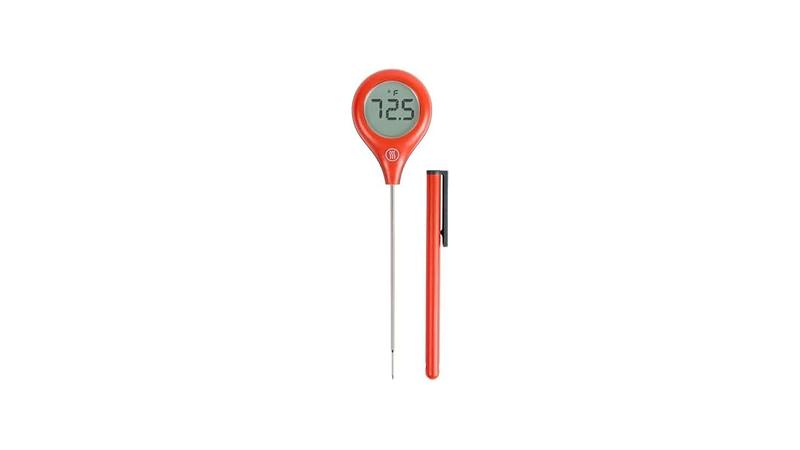
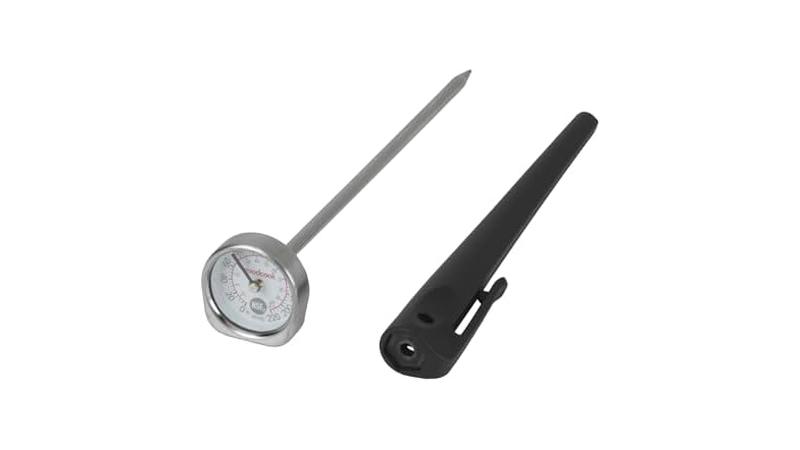
Dial thermometers work, but they react slowly and often lack precision in thin foods. Digital thermocouples or thermistors give you a reading in two to three seconds, reducing the time your food spends losing heat while you check it.
| Thermometer Type | Speed | Accuracy |
|---|---|---|
| Thermocouple | 2-3 seconds | +/- 1°F |
| Thermistor | 5-10 seconds | +/- 2°F |
| Dial Bimetallic | 15-20 seconds | +/- 3°F |
Invest in a fast digital model. Speed matters when you are trying to keep burgers juicy while ensuring they hit the safe zone.
Safe Temperatures for Different Ground Beef Dishes
The 160°F rule applies universally, but how you achieve it changes based on the recipe. Meatloaf, meatballs, and smash burgers all present unique challenges when monitoring the ground beef internal temperature.
Thick meatloaves retain heat well. Once the center hits 160°F, you can pull it from the oven. The residual heat will hold that temperature safely for several minutes as it rests.
Resting also allows the juices to redistribute, making slicing much cleaner.
Smash burgers cook incredibly fast due to their thin profile. They can jump from 130°F to 170°F in less than a minute. You need a lightning-fast thermometer to catch them exactly at 160°F before they dry out completely.
- Form meatballs uniformly so they finish cooking at the same time
- Bake meatloaf on a sheet pan instead of a loaf pan for faster, more even heating
- Flip burgers only once to maintain structural integrity for probing
- Pull stuffed peppers out when the filling registers 160°F in the center
- Simmer pasta sauces with ground beef until the meat pieces hit the safe mark
Stuffed items like jalapeño poppers or cheese-stuffed burgers require extra attention. The dense filling insulates the surrounding meat, creating cold spots. Always probe the meat directly adjacent to the stuffing, not just the outer edge.
Tip: For perfectly juicy burgers, remove them from the heat the exact second your thermometer reads 160°F. Do not guess or estimate. Overcooking by even 10 degrees ruins the texture.
Common Mistakes When Cooking Ground Beef
Home cooks make predictable errors that compromise safety. Avoiding these mistakes ensures your ground beef internal temperature: safe temperature guide practices actually protect your household from illness.
Judging doneness by color is the most frequent error. As mentioned earlier, myoglobin reacts unpredictably to heat. A burger can look perfectly brown in the middle while still harboring live bacteria at 140°F.
Conversely, a fully safe burger might retain a slight pink tint due to certain spices or curing agents.
Another major mistake involves checking the temperature too close to the pan or grill grate. Metal conducts heat. If your probe tip touches the cooking surface, you get a falsely high reading.
The meat itself might still be dangerously undercooked in the true center.
- Relying on clear juices as a sign of doneness
- Pressing burgers flat with a spatula, which squeezes out moisture and alters thickness
- Using the same unwashed thermometer probe for raw and cooked meat
- Guessing cook times instead of verifying with a thermometer
- Thawing ground beef on the counter, allowing bacterial multiplication before cooking
- Ignoring carryover cooking in very thick meatloaves
The Food and Drug Administration (FDA) reports that improper cooking temperatures account for a significant percentage of home-based foodborne illness outbreaks. Taking five seconds to use a thermometer eliminates this risk entirely.
Cross-contamination during preparation also undermines safe cooking. If you place a cooked burger back on the plate that held raw meat, the safe temperature no longer matters. Always use separate plates and utensils for raw and finished products.
How Does Carryover Cooking Affect Ground Beef
Carryover cooking happens when food continues to rise in temperature after leaving the heat source. The outer layers hold thermal energy that slowly migrates toward the cooler center. This concept matters when targeting the perfect ground beef internal temperature.
For thin items like standard quarter-pound burger patties, carryover cooking is negligible. The meat lacks the mass required to store enough heat to push the center up more than a degree or two. You must cook these entirely to 160°F on the grill.
Thick preparations behave differently. A large, dense meatloaf pulled from the oven at 155°F will easily coast up to 160°F or higher during a ten-minute rest. The heavy mass traps steam and radiant heat effectively.
| Dish Type | Expected Temp Rise After Removal |
|---|---|
| Thin Smash Burger | 0°F – 2°F |
| Standard Quarter Pounder | 2°F – 4°F |
| Large Meatball | 3°F – 5°F |
| Dense Meatloaf | 5°F – 10°F |
Use this table to plan your removal strategy. However, when in doubt, always leave the meat on the heat until the thermometer explicitly reads 160°F. Safety trumps theoretical calculations every time.
Resting meat serves another purpose beyond temperature management. It allows muscle fibers to relax and reabsorb expelled moisture. Cutting into a meatloaf immediately causes the juices to flood the cutting board, resulting in dry slices.
What Are the Best Thermometers for Ground Beef
Selecting the right tool simplifies the entire process. A cheap, slow thermometer frustrates cooks and leads to abandoned safety checks. Investing in quality gear guarantees you hit the correct ground beef internal temperature: safe temperature guide mark effortlessly.
Instant-read thermocouples represent the gold standard. Brands like ThermoWorks design probes that register temperatures in two seconds flat. This speed prevents heat loss while the probe sits in the meat, giving you a highly accurate snapshot of the core.
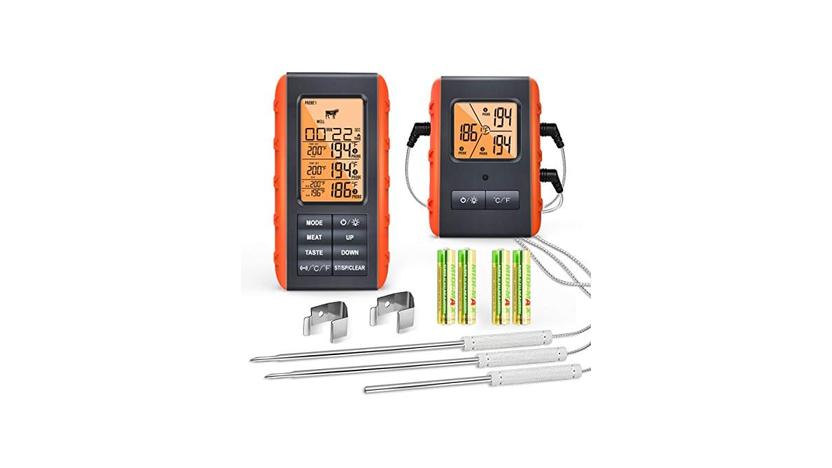
Leave-in probe thermometers work brilliantly for meatloaf and baked dishes. You insert the wired probe before the food goes into the oven. The base unit sits on your counter, alarming you the exact moment the meat reaches 160°F.
- Thermocouples offer the fastest response times available
- Thermistors provide excellent accuracy at a slightly lower price point
- Leave-in probes eliminate the need to open the oven repeatedly
- Waterproof models survive accidental drops into the sink
- Look for models with backlight screens for grilling at night
- Avoid glass dial thermometers as they break easily and read slowly
Calibration keeps your tool honest. Fill a glass with crushed ice and a little water. Insert the probe without touching the sides.
It should read exactly 32°F (0°C). If it deviates, use the calibration nut or digital offset function to fix it.
Important: Wash your thermometer probe with hot, soapy water after every single use. Sticking a dirty probe into cooked meat reintroduces the exact bacteria you just destroyed with heat.
How to Store and Handle Raw Ground Beef Safely
Cooking to the right temperature only solves half the equation. Proper handling before the meat hits the pan prevents bacterial loads from multiplying to unmanageable levels. Safe storage supports your overall ground beef internal temperature strategy.
Keep your refrigerator set at or below 40°F (4°C). Bacteria multiply rapidly in the danger zone between 40°F and 140°F. Ground beef purchased from the store should go straight into the fridge or freezer upon arriving home.
Cook or freeze fresh ground beef within one to two days of purchase. Freezing halts bacterial growth completely. If you buy bulk packages, divide the meat into meal-sized portions before freezing so you only thaw what you need.
- Store raw ground beef on the bottom shelf of the fridge to prevent drips onto ready-to-eat foods
- Place the packaged meat inside a bowl or rimmed plate for secondary containment
- Thaw frozen beef overnight in the refrigerator, never on the kitchen counter
- Use the microwave defrost setting only if you plan to cook the meat immediately afterward
- Wash hands thoroughly with soap for twenty seconds after touching raw packaging
- Sanitize countertops and cutting boards with a mild bleach solution after prep
The USDA Food Safety and Inspection Service emphasizes that thawing meat at room temperature allows the outer layers to enter the danger zone while the center remains frozen. This uneven warming encourages explosive bacterial growth on the surface.
When grocery shopping, pick up ground beef last. Keep it separated from produce in your cart. Bag it separately at checkout.
These small habits drastically reduce cross-contamination risks before you even start cooking.
Frequently Asked Questions
Can I eat ground beef if it is still slightly pink inside?
Yes, but only if a meat thermometer confirms the center reached 160°F. Color is an unreliable indicator of safety due to variations in myoglobin and pH levels. Always trust the temperature reading over visual cues when cooking ground beef.
Does the safe temperature change for grass-fed ground beef?
No. All ground beef, regardless of whether it is grass-fed, organic, or conventional, requires a minimum internal temperature of 160°F. The grinding process introduces the same bacterial risks across all types of beef production methods.
How do I check the temperature of loose ground beef in a sauce?
Push the loose meat into a thick mound in the center of the pot. Insert your digital thermometer probe into the thickest part of that mound. Stir the sauce, wait a minute, and test another spot to ensure uniform heating throughout the dish.
Is it safe to cook ground beef from frozen?
It is safe, but it takes about fifty percent longer than cooking thawed meat. You must still ensure the absolute center of the frozen block reaches 160°F. Breaking the meat apart as it thaws in the pan helps it cook evenly and safely.
What happens if I accidentally eat undercooked ground beef?
You risk contracting foodborne illnesses caused by pathogens like E. coli or Salmonella. Symptoms include severe stomach cramps, vomiting, and diarrhea.
Monitor your health closely for several days and contact a healthcare provider if symptoms develop.
Final Thoughts
Hitting the correct ground beef internal temperature: safe temperature guide standard of 160°F protects everyone at your table. Buy a fast digital thermometer, insert it into the thickest part of the meat, and never rely on color alone. Cook confidently knowing your meals are both delicious and completely safe.