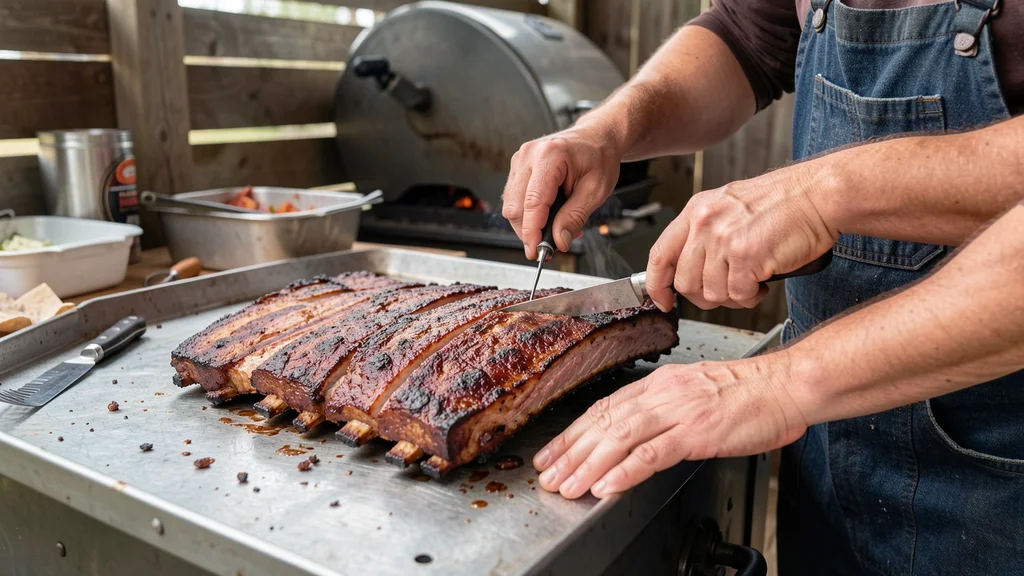
Pork ribs temperature guide knowledge is the single most important skill for any backyard pitmaster. Getting the internal heat right separates dry, tough meat from tender, fall-off-the-bone perfection. This pork ribs temperature guide covers exact numbers for baby back, spare, and St.
Louis cuts so you never guess again. You will learn target ranges, probe testing methods, and resting techniques that guarantee juicy results every time. Cooking low and slow requires patience, but following a reliable pork ribs temperature guide removes all the stress from your next barbecue session.
Simply put, pork ribs are fully cooked and safe to eat at 145°F according to the USDA. However, for the best texture, tenderness, and flavor, you should cook them until the internal temperature reaches between 195°F and 203°F. This higher range breaks down tough collagen into rich gelatin.
What Is the Ideal Target in a Pork Ribs Temperature Guide
The core of any pork ribs temperature guide revolves around one specific number range. You must aim for an internal temperature between 195°F and 203°F. Reaching this sweet spot ensures the connective tissues melt completely.
Cooking ribs to the standard food safety minimum leaves them chewy and unappetizing. The United States Department of Agriculture states that pork is safe to consume at 145°F. But safe does not mean tender or enjoyable for barbecue purposes.
Collagen, the tough protein found heavily in rib meat, begins to dissolve rapidly around 160°F. It takes hours of sustained heat to convert that collagen into soft, mouth-coating gelatin. Rushing this process ruins the final product.
- 145°F is the absolute minimum for food safety compliance
- 160°F starts the collagen breakdown process slowly
- 180°F yields meat that is safe but still quite chewy
- 195°F delivers excellent tenderness and great moisture retention
- 203°F provides the ultimate fall-off-the-bone texture
- 205°F and above risks drying out the meat entirely
- Ambient smoker heat should stay between 225°F and 250°F
Hitting the 203°F mark gives you competition-level results. Most professional pitmasters pull their racks right at this number. Going past 205°F turns the meat mushy and strips away valuable juices.
| Internal Temperature | Meat Texture Result |
|---|---|
| 145°F | Safe but very tough and chewy |
| 160°F | Collagen begins melting slowly |
| 180°F | Edible but lacks true tenderness |
| 195°F – 203°F | Perfect bite-through and juicy |
| 205°F+ | Overcooked, mushy, and dry |
This chart shows exactly why patience matters when smoking ribs. Keep your thermometer handy and trust the numbers over the clock.
How to Measure Internal Heat Accurately Every Time
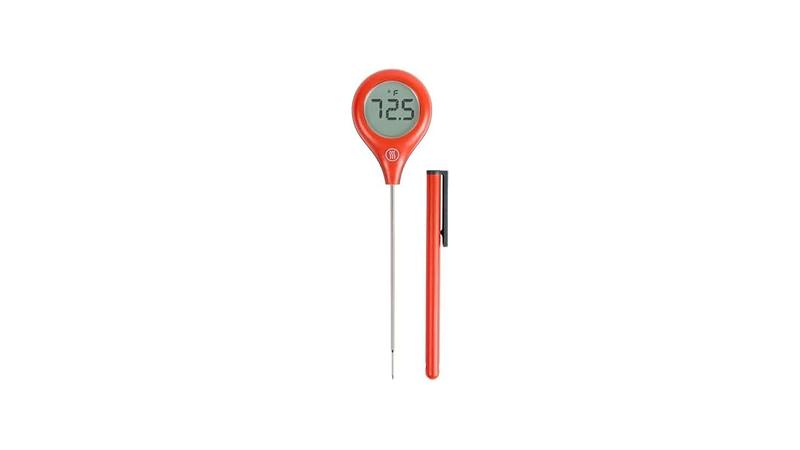
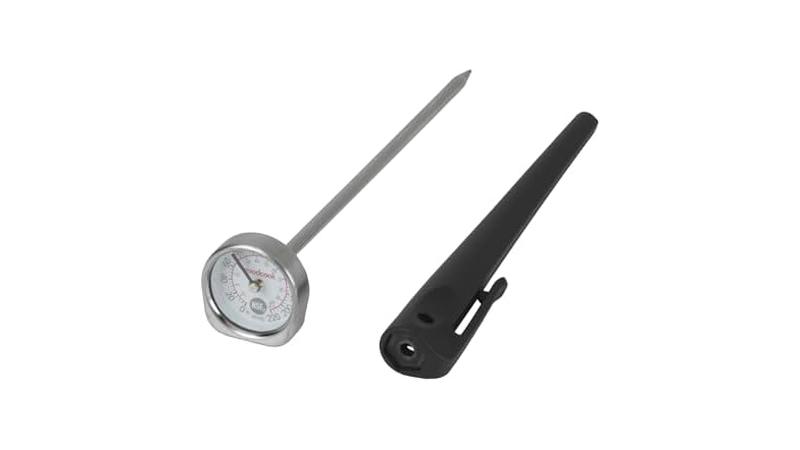
Using the right tools makes your pork ribs temperature guide actually work in practice. A high-quality instant-read digital thermometer is mandatory for serious barbecue. Analog dial thermometers lack the precision needed for thin cuts like ribs.
Insert the probe parallel to the bones rather than perpendicular. Pushing the needle straight down often hits bone immediately, giving you a false reading. Bone conducts heat differently than muscle tissue and skews the number.
ThermoWorks and other reputable brands report that digital probes read temperatures within one degree of accuracy. Cheap models can swing five degrees or more, leading to undercooked or dried-out meat. Invest in a reliable tool.
- Calibrate your thermometer using ice water before cooking day
- Insert the probe tip between two center bones on the rack
- Angle the needle parallel to the bone structure for depth
- Avoid touching fat pockets as they read hotter than lean meat
- Wait three to five seconds for the digital display to stabilize
- Check multiple spots across the rack since edges cook faster
Checking multiple locations prevents nasty surprises at the dinner table. The thickest part of the rack near the center dictates overall doneness. Thin ends will always finish slightly ahead of the middle section.
Warning: Never leave a standard instant-read thermometer inside a closed smoker. The intense ambient heat destroys the internal electronics quickly. Only use dedicated leave-in probes rated for continuous smoker exposure.
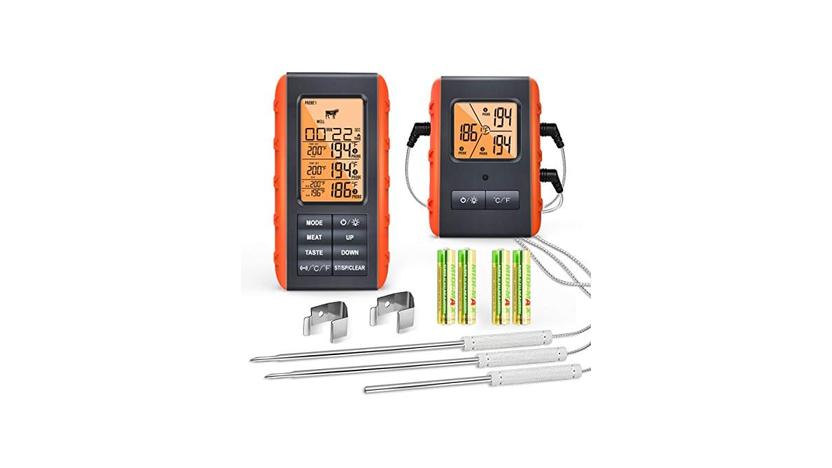
Leave-in dual-probe systems solve this problem elegantly. One probe tracks the smoker air temperature while the second monitors the meat directly. This setup keeps you informed without constantly opening the lid.
Why Different Rib Cuts Require Specific Heat Adjustments
Not all ribs cook at the same speed, which complicates any basic pork ribs temperature guide. Baby back ribs come from the loin area and contain less fat. They cook faster and dry out quicker if left too long.
Spare ribs originate from the belly side of the pig. They carry significantly more intramuscular fat and connective tissue. That extra fat requires longer exposure to heat to render properly and soften the meat.
St. Louis style ribs are simply spare ribs trimmed into a neat rectangle. Removing the rib tips and skirt creates uniform thickness.
This shape promotes even cooking across the entire surface of the rack.
- Baby back ribs typically finish in four to five hours total
- Spare ribs need five to six hours due to higher fat content
- St. Louis cuts mirror spare rib timing but cook more evenly
- Rib tips cook much faster and burn easily if left attached
- Country style ribs act more like pork chops and need different handling
- Thickness variations within a single rack cause uneven cooking
The National Pork Board notes that proper cut selection impacts cooking time by up to thirty percent. Knowing your specific cut allows you to adjust fire management strategies accordingly. Treat each type as a unique project.
| Rib Cut Type | Average Cook Time | Fat Content Level |
|---|---|---|
| Baby Back Ribs | 4 to 5 hours | Low to Medium |
| Spare Ribs | 5 to 6 hours | High |
| St. Louis Style | 5 to 6 hours | Medium to High |
| Country Style | 2 to 3 hours | Medium |
Use this comparison to plan your cook day timeline accurately. Buying the wrong cut for your available time window leads to rushed meals. Match the meat to your schedule for stress-free smoking.
How to Use the Bend Test Alongside Your Thermometer
Numbers tell only half the story when following a pork ribs temperature guide. Physical cues confirm what the thermometer suggests. The bend test remains the most trusted tactile method among experienced pitmasters worldwide.
Lift the rack from the center using heavy-duty tongs. Properly cooked ribs droop downward significantly at both ends. The meat should crack slightly on the surface as gravity pulls the bones apart.
If the rack stays stiff like a board, the collagen has not broken down yet. Put it back in the smoker regardless of what the thermometer reads. Sometimes thick fat caps insulate the probe and give premature readings.
- Grip the slab firmly in the exact middle with long tongs
- Lift it gently off the grill grates about six inches high
- Watch how far the two ends droop toward the ground
- Look for surface cracking between the exposed bone ridges
- Shake lightly to see if the meat wobbles freely on the bone
- Return to heat immediately if the rack feels rigid or stiff
Combining the bend test with a probe reading of 200°F guarantees success. Relying solely on one method introduces unnecessary risk. Professional barbecue teams use both checks simultaneously during competitions.
Tip: Tear resistance offers another quick check. Grab a single bone near the edge and twist gently. If the meat separates cleanly from the bone with zero effort, your ribs reached the perfect level of doneness.
Another visual indicator involves checking bone exposure. As meat shrinks during rendering, the bones push outward. Seeing about a quarter inch of bare bone at the tips signals approaching completion.
What Are the Best Smoker Settings for Low and Slow Cooking
Maintaining steady ambient heat supports the goals of any pork ribs temperature guide. Fluctuating wildly between 200°F and 300°F ruins texture. Consistency matters more than chasing a single magic number on the dial.
The sweet spot for smoking ribs sits between 225°F and 250°F. This range allows fat to render slowly without frying the exterior. Higher temperatures cause the outside to burn before the inside softens.
Pellet grills excel at holding these tight tolerances automatically. Offset stick burners require manual vent adjustments every thirty minutes. Charcoal kettle grills fall somewhere in between depending on your airflow control skills.
- Set pellet grills to 225°F for maximum smoke absorption early on
- Increase offset smokers to 250°F after wrapping to push through stalls
- Keep top exhaust vents fully open to prevent stale bitter smoke
- Adjust bottom intake vents in tiny increments to avoid spikes
- Use lump charcoal instead of briquettes for cleaner heat output
- Add wood chunks sparingly since thin blue smoke beats thick white clouds
- Monitor ambient temps with a separate grate-level probe for accuracy
Smoke quality directly impacts flavor development during the long cook. Dirty, thick white smoke deposits creosote on the meat surface. Clean, nearly invisible blue smoke imparts the sweet barbecue flavor everyone craves.
According to research published by AmazingRibs.com, maintaining clean combustion reduces bitter flavors by over forty percent. Fire management separates amateur attempts from professional results. Learn your specific equipment intimately before hosting guests.
How Does Wrapping Affect the Final Internal Temperature
The Texas Crutch changes everything about following a pork ribs temperature guide. Wrapping ribs in aluminum foil or butcher paper traps steam tightly. This technique powers through the dreaded evaporative cooling stall phase.
Evaporative cooling happens when surface moisture escapes rapidly. The escaping liquid cools the meat just like sweat cools human skin. Internal temperatures plateau around 160°F and refuse to climb for hours.
Wrapping stops evaporation completely. The trapped humidity raises the local boiling point around the meat. Temperatures resume climbing steadily toward that critical 203°F finish line without drying out the muscle fibers.
| Wrapping Material | Bark Preservation | Moisture Retention |
|---|---|---|
| Heavy Aluminum Foil | Poor – softens bark quickly | Excellent – traps all steam |
| Pink Butcher Paper | Good – breathes slightly | Moderate – lets some escape |
| No Wrap (Naked) | Perfect – maximum crust | Low – high moisture loss |
Foil produces softer, wetter ribs similar to oven-braised textures. Butcher paper strikes a balance favored by Texas barbecue legends. Leaving them naked builds incredible bark but extends total cooking time drastically.
Important: Always add a small amount of liquid like apple juice or honey butter before sealing foil packets. This braising liquid accelerates collagen breakdown and infuses extra sweetness deep into the muscle fibers during the wrapped phase.
Unwrap the ribs for the final thirty minutes of cooking. This step re-firms the exterior glaze and sets any sauce applied. Skipping this final unwrapped phase leaves you with soggy surfaces.
Why Resting Time Matters After Reaching Target Heat
Pulling ribs off the smoker at 203°F does not mean eating them immediately. Resting allows muscle fibers to relax and reabsorb expelled juices. Cutting too soon drains those precious liquids directly onto your cutting board.
During the long cook, heat forces moisture toward the center of the meat. Removing the heat source reverses this pressure gradient. Juices redistribute evenly throughout the rack during a proper rest period.
Wrap the finished ribs loosely in fresh butcher paper or a towel. Place them inside an empty insulated cooler to hold warmth safely. This faux cambro method keeps temperatures above food-safe limits for hours.
- Rest baby back ribs for at least twenty to thirty minutes minimum
- Allow thicker spare ribs to rest closer to forty-five full minutes
- Keep the wrapping loose so trapped steam does not ruin the bark
- Never slice individual bones until the resting period finishes completely
- Use an empty cooler lined with towels to extend holding times safely
- Monitor internal heat during rests to ensure it stays above 140°F
The American Meat Science Association confirms that rested meats retain up to fifteen percent more moisture than those sliced immediately. That difference translates directly to better mouthfeel and richer flavor profiles.
Plan your meal schedule backward from serving time. If dinner starts at six o’clock, the ribs must enter the rest phase by five. Factoring resting windows prevents panicked rushing at the end of long cooks.
Common Mistakes That Ruin Perfect Rib Temperatures
Even with a solid pork ribs temperature guide, beginners make predictable errors. Opening the smoker lid constantly tops the list of bad habits. Every peek drops ambient heat by fifty degrees and adds fifteen minutes of recovery time.
Trusting built-in dome thermometers causes massive frustration. These cheap dials measure air near the lid, not near the meat grate. Actual cooking temperatures at the rack level often differ by twenty degrees or more.
Applying sugary sauces too early burns the exterior black. Sugar caramelizes beautifully but carbonizes rapidly above 265°F. Wait until the last thirty minutes of cooking to glaze your ribs safely.
- Stop lifting the lid unless actively wrapping or spritzing the meat
- Replace factory dome thermometers with accurate digital grate clips
- Delay sweet barbecue sauces until the final glazing stage only
- Trim excess hanging fat flaps that catch direct flame and ignite
- Remove the tough silver skin membrane before applying dry rubs
- Avoid overcrowding the smoker grate which blocks vital airflow circulation
- Do not rely purely on cooking time charts since every animal differs
Leaving the silverskin membrane intact blocks seasoning penetration. This tough layer also prevents fat rendering underneath. Slide a butter knife under the membrane on the bone side and peel it off completely with a paper towel grip.
Warning: Spraying cold water or apple juice directly onto hot coals causes dangerous flare-ups. Apply spritzes gently using a fine mist bottle aimed only at the meat surface. Keep the spray away from active flames entirely.
Spritzing helps build color and delays bark formation slightly. Do it every forty-five minutes after the first two hours of smoking. Over-spritzing washes away your rub and lowers the cooking chamber temperature unnecessarily.
Frequently Asked Questions
Can I eat pork ribs cooked only to 145 degrees?
Yes, the USDA considers pork safe to consume at 145°F followed by a three-minute rest. However, ribs cooked to this temperature will be extremely tough and chewy. Collagen requires prolonged exposure to temperatures above 190°F to break down into tender gelatin.
Why did my ribs hit 203 degrees but still feel tough?
Temperature alone does not guarantee tenderness if the heat was applied too quickly. Cooking at excessively high ambient temperatures pushes the internal probe reading up before collagen has time to melt. Lower your smoker heat to 225°F and allow more time for chemical conversion.
Should I boil ribs before smoking to speed up cooking?
Boiling extracts valuable flavor and fat into the water, leaving bland meat behind. It also par-cooks the exterior unevenly, preventing proper smoke adhesion. Stick to traditional low and slow smoking methods for superior taste and texture results.
How do I know if my thermometer probe is hitting bone?
Hitting bone causes the digital reading to spike suddenly or stop advancing smoothly. Bones conduct heat faster than surrounding muscle tissue, giving falsely high numbers. Reposition the needle parallel to the ribs and push it into the thickest meat pocket.
Does carrying the ribs inside affect the final temperature?
Moving ribs from a hot smoker to a cooler indoor environment accelerates heat loss rapidly. Carryover cooking still occurs, but the exterior cools much faster than expected. Wrap them tightly in towels or place them in a warmed oven set to its lowest setting.
Final Thoughts
Following a reliable pork ribs temperature guide transforms average backyard cooks into confident pitmasters. Aim for that 195°F to 203°F window, verify with the bend test, and always rest your meat before slicing. Master these fundamentals and every rack you smoke will deliver incredible tenderness and flavor.