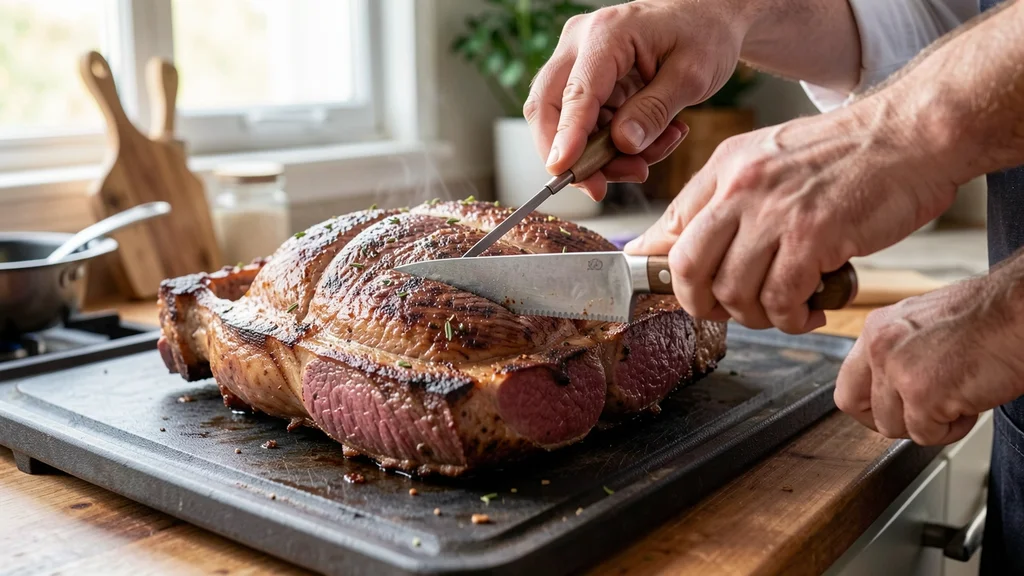
A reliable Meat Temperature Chart: Safe Internal Temperatures for Beef, Pork, Chicken, Turkey & More is the single most important tool in your kitchen. Cooking meat to the right temperature prevents foodborne illness and guarantees juicy, flavorful results every time. This post covers exact internal temperatures for all major proteins, explains how to use a meat thermometer correctly, and highlights common mistakes home cooks make.
Whether you grill steaks or roast whole turkeys, knowing these numbers keeps your family safe. Stop guessing and start cooking with confidence using this complete meat temperature chart.
Simply put, a Meat Temperature Chart: Safe Internal Temperatures for Beef, Pork, Chicken, Turkey & More gives you exact heat targets for every protein. Poultry must reach 165°F, ground meats need 160°F, and whole cuts of beef or pork are safe at 145°F followed by a three-minute rest.
What Is a Meat Temperature Chart and Why It Matters
A Meat Temperature Chart: Safe Internal Temperatures for Beef, Pork, Chicken, Turkey & More is a quick-reference guide that lists the minimum safe internal temperatures for different types of raw meat. These numbers come directly from food safety authorities like the USDA and the FDA. They exist to protect you from harmful bacteria such as Salmonella, E.
coli, and Campylobacter.
Guessing when meat is done by looking at its color or texture is incredibly risky. The USDA reports that one in four hamburgers turns brown before reaching a safe internal temperature. Relying on visual cues alone puts you and your guests at serious risk for food poisoning.
Using a proper safe cooking temperature guide eliminates that guesswork entirely. You simply insert a thermometer, read the number, and know immediately if the food is safe to eat. This practice also prevents overcooking, which ruins expensive cuts of meat.
- Prevents foodborne illnesses caused by dangerous pathogens
- Stops you from overcooking expensive cuts of meat
- Provides consistent, repeatable results every time you cook
- Builds confidence for beginner and intermediate home cooks
- Satisfies health department requirements for commercial kitchens
- Helps you achieve the perfect level of doneness for steaks
Food safety experts agree that a digital thermometer paired with a reliable chart is non-negotiable for modern cooking. According to the Centers for Disease Control and Prevention (CDC), roughly 48 million Americans get sick from foodborne diseases annually. A simple internal meat temperature check prevents many of those cases.
How to Use a Meat Thermometer Correctly Every Time
Owning a Meat Temperature Chart: Safe Internal Temperatures for Beef, Pork, Chicken, Turkey & More means nothing if you use your thermometer incorrectly. Proper placement ensures you read the actual temperature of the meat rather than the pan, the bone, or a pocket of fat. Always aim for the thickest part of the protein.
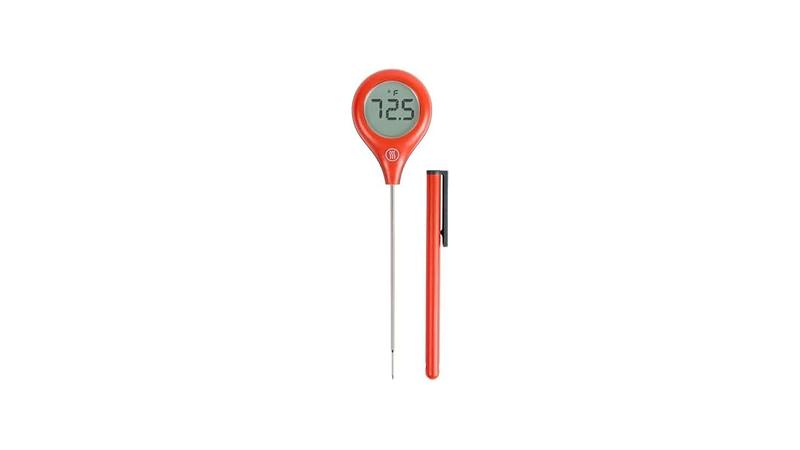
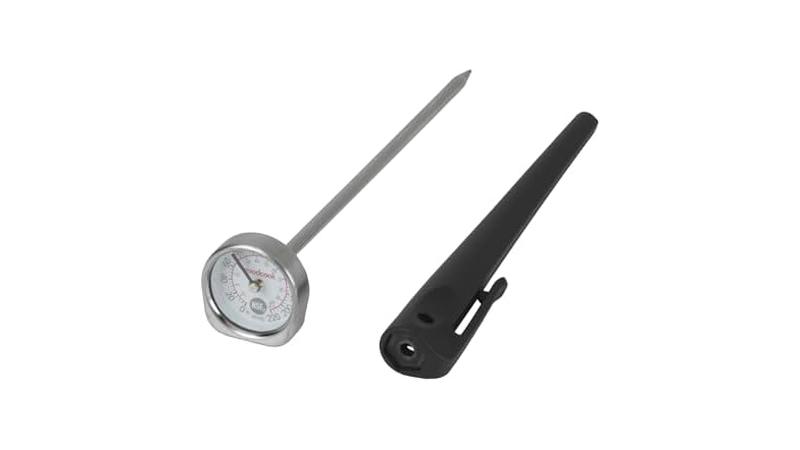
Digital instant-read thermometers are currently the best option for home cooks. They register temperatures in two to three seconds. Dial thermometers take much longer and often require calibration to remain accurate over time.
When checking thin cuts like chicken breasts or pork chops, insert the probe horizontally through the side. Push it toward the center so the sensor sits in the middle of the thickest section. Avoid touching bone, fat, or gristle, as these materials conduct heat differently and give false readings.
- Turn on your digital thermometer and ensure the battery is fresh
- Identify the thickest part of the meat away from bones or heavy fat
- Insert the probe at least half an inch deep for instant-read models
- Wait for the numbers to stabilize completely before reading the display
- Compare your reading against the meat temperature chart target
- Pull the meat off the heat slightly below the target to account for carryover cooking
- Clean the probe with hot soapy water immediately after each use
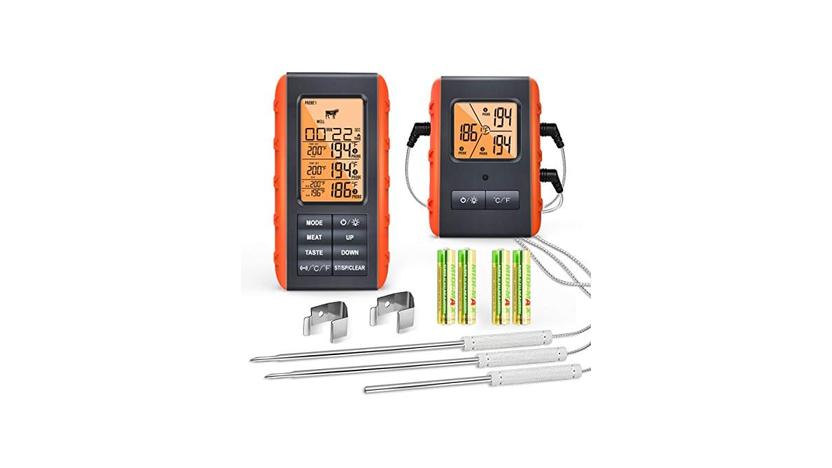
Warning: Never leave an instant-read thermometer inside meat while it cooks in the oven or on the grill. The intense ambient heat will melt the plastic housing and destroy the electronic sensor. Only leave-in probe thermometers are designed for continuous oven use.
Calibrating your thermometer regularly keeps your readings trustworthy. Fill a glass with crushed ice and a little water. Insert the probe without touching the glass sides.
It should read exactly 32°F. If it does not, use the calibration nut or reset button to adjust it.
Safe Internal Temperatures for Beef and Veal
Beef offers the most flexibility when it comes to safe cooking temperatures. Whole muscle cuts like steaks, roasts, and chops can be eaten safely at lower temperatures because harmful bacteria only live on the surface. Searing the outside effectively kills those pathogens, leaving the inside safe to enjoy rare or medium-rare.
Ground beef is a completely different story. The grinding process mixes surface bacteria throughout the entire batch. You must cook all ground beef, veal, and lamb to a higher temperature to ensure safety.
Skipping this step risks severe E. coli exposure.
The USDA recommends cooking all whole cuts of beef, veal, and lamb to a minimum of 145°F. After removing the meat from the heat source, you must let it rest for at least three minutes. This rest period allows the temperature to remain steady or rise slightly, destroying any remaining bacteria.
| Beef Doneness Level | Internal Temperature | Visual Description |
|---|---|---|
| Rare | 125°F (plus 3 min rest) | Cool red center |
| Medium-Rare | 135°F (plus 3 min rest) | Warm red center |
| Medium | 145°F (plus 3 min rest) | Warm pink center |
| Medium-Well | 150°F (plus 3 min rest) | Slightly pink center |
| Well Done | 160°F+ | No pink, fully brown |
| Ground Beef | 160°F (no rest needed) | Brown throughout |
This table provides the exact targets you need for every preference. Remember that carryover cooking will raise the internal temperature by five to ten degrees after you pull the steak off the grill. Remove your beef just before it hits your target number for perfect results.
Safe Internal Temperatures for Pork Chops and Roasts
Many older cookbooks still list 160°F as the required temperature for pork. That information is outdated. The USDA lowered the recommended internal meat temperature for whole cuts of pork to 145°F years ago, provided you include a three-minute rest time afterward.
This change revolutionized how home cooks prepare pork. Cooking a pork chop to 160°F leaves it dry, tough, and chalky. Pulling it off the heat at 140°F and letting it rest until it reaches 145°F yields a juicy, slightly pink center that is completely safe to eat.
Just like beef, the rules change completely when you grind the meat. Ground pork, sausage, and bratwurst must reach 160°F internally. The grinding process distributes bacteria throughout the mixture, requiring higher heat to neutralize the threat.
- Pork steaks and chops: 145°F with a three-minute rest
- Pork roasts and tenderloins: 145°F with a three-minute rest
- Ground pork and sausage: 160°F with no rest required
- Fresh ham (raw): 145°F with a three-minute rest
- Pre-cooked ham (reheating): 140°F for commercially packaged products
- Bacon: Cook until crisp, typically around 145°F to 150°F
Tip: Brining pork chops in a saltwater solution for two hours before cooking adds moisture and acts as a buffer against accidental overcooking. Even if you overshoot the meat temperature chart target by a few degrees, brined pork stays remarkably tender.
Always measure pork roasts in multiple spots. A large pork shoulder might read 145°F on the outer edge but only 120°F near the bone. Probe the thickest section away from the bone to get a true reading of the overall progress.
Why Poultry Requires Higher Cooking Temperatures
Poultry carries unique risks compared to red meat. Chickens and turkeys frequently harbor Salmonella and Campylobacter deep within their muscle tissue, not just on the surface. Because of this structural difference, you cannot serve poultry rare or medium-rare.
Every part of the bird must reach 165°F.
The FDA and CDC both mandate 165°F as the absolute minimum safe cooking temperature for all poultry products. This includes whole birds, individual breasts, thighs, wings, and ground chicken or turkey. There are no exceptions to this rule for home cooks.
Dark meat actually tastes better when cooked slightly past the minimum safety threshold. Chicken thighs and turkey legs contain more connective tissue and collagen. Heating them to 175°F breaks down that collagen into gelatin, resulting in a much softer, richer bite.
| Poultry Type | Minimum Safe Temperature | Ideal Target for Best Texture |
|---|---|---|
| Whole Chicken | 165°F | 165°F in breast, 175°F in thigh |
| Chicken Breasts | 165°F | 160°F pulled, rests to 165°F |
| Chicken Thighs | 165°F | 175°F to 180°F |
| Whole Turkey | 165°F | 165°F breast, 175°F thigh |
| Ground Turkey or Chicken | 165°F | 165°F throughout |
| Duck and Goose | 165°F | 165°F minimum |
Notice how pulling chicken breasts at 160°F works if you let them rest. Carryover cooking pushes the final temperature up to the required 165°F mark without drying out the lean white meat. This technique relies entirely on having an accurate Meat Temperature Chart: Safe Internal Temperatures for Beef, Pork, Chicken, Turkey & More and a fast thermometer.
Never stuff a turkey or chicken before roasting it. The stuffing acts as insulation, slowing down the cooking process inside the cavity. By the time the stuffing reaches 165°F, the surrounding breast meat is usually dried out and ruined.
Cook stuffing in a separate dish instead.
What Are the Safe Temperatures for Seafood and Fish
Seafood often gets left off standard cooking charts, but it requires just as much attention. The FDA recommends cooking all fin fish to an internal temperature of 145°F. At this temperature, the flesh becomes opaque and flakes easily when tested with a fork.
Shellfish presents a different set of visual and thermal cues. Shrimp, lobster, and crab turn bright red or pink, and their flesh becomes pearly and opaque. Scallops should look milky white and feel firm to the touch.
Clams, mussels, and oysters must open their shells during cooking. Discard any bivalves that refuse to open after adequate heat exposure.
Many professional chefs prefer to cook high-quality salmon to medium-rare, around 125°F to 130°F. While this produces a superior texture, it technically falls below the official FDA recommendation. If you choose to undercook fish, buy sushi-grade products that have been flash-frozen to kill parasites first.
- Fin fish (salmon, cod, tilapia): 145°F or until flesh flakes
- Shrimp and prawns: Cook until pink and opaque, roughly 120°F
- Lobster tails: 140°F to 145°F for tender meat
- Scallops: 130°F to 135°F to prevent rubbery texture
- Clams and mussels: Steam until shells pop open completely
- Crab legs: Reheat pre-cooked legs to 145°F
Important: Pregnant women, young children, older adults, and anyone with a compromised immune system should strictly follow the 145°F guideline for all seafood. Eating raw or undercooked fish poses severe health risks for these vulnerable groups according to the FDA.
Using a thermometer on thin fish fillets can be tricky. Slide the probe horizontally through the thickest edge. For very thin pieces of sole or flounder, rely on visual cues like opacity and flaking rather than forcing a probe into a tiny piece of meat.
How Does Carryover Cooking Affect Your Final Temperature
Carryover cooking is the phenomenon where meat continues to rise in temperature after you remove it from the heat source. The exterior of the meat absorbs massive amounts of thermal energy during cooking. Once removed, that heat slowly migrates inward, pushing the core temperature higher.
Ignoring this principle is the most common reason home cooks ruin expensive roasts and steaks. If you wait until your thermometer reads exactly 145°F before pulling a pork loin off the grill, it will likely coast up to 155°F while resting. You end up with overcooked, dry meat despite following the meat temperature chart perfectly.
The amount of temperature rise depends on the size of the cut and the intensity of the cooking method. A massive beef brisket pulled from a smoker will retain heat far longer than a thin chicken breast seared in a skillet. High-heat methods like grilling create a larger temperature gradient, leading to more aggressive carryover cooking.
- Small cuts (steaks, chops, chicken breasts) rise 3°F to 5°F during rest
- Medium roasts (pork loins, whole chickens) rise 5°F to 10°F during rest
- Large roasts (prime rib, whole turkeys, briskets) rise 10°F to 15°F during rest
- Always pull meat off the heat slightly before it hits your target number
- Tent loosely with foil to keep the surface warm without trapping steam
- Never skip the resting phase, as juices need time to redistribute evenly
Resting meat serves a dual purpose. It manages carryover cooking to hit your exact target internal meat temperature, and it allows muscle fibers to relax. When meat cooks, the proteins contract and squeeze moisture toward the center.
Resting lets those fibers loosen up, redistributing the juices back toward the edges. Cutting into a steak immediately causes all that liquid to spill onto your cutting board.
A good rule of thumb is to rest meat for about half the total time it spent cooking. A steak grilled for ten minutes needs five minutes of rest. A turkey roasted for four hours benefits from thirty to forty-five minutes under a loose foil tent before carving.
Common Mistakes People Make With Meat Thermometers
Even experienced cooks make errors when measuring safe cooking temperatures. The most frequent mistake involves probing the wrong spot. Hitting a bone with your thermometer probe gives a falsely high reading because bone conducts heat faster than muscle tissue.
Fat pockets do the opposite, giving falsely low readings.
Another widespread issue is failing to clean the thermometer between uses. If you check a raw burger at 110°F and then use the same unwashed probe to check a finished chicken breast, you risk cross-contamination. Wipe the probe with a sanitizing wipe or wash it with hot soapy water between every single test.
Many home cooks also rely on cheap, uncalibrated dial thermometers purchased years ago. These analog devices lose accuracy quickly when dropped or exposed to extreme temperature swings. Upgrading to a modern digital instant-read thermometer solves this problem instantly and costs less than twenty dollars.
- Probing too close to the bone or resting the tip on the cooking grate
- Not inserting the probe deep enough to reach the thermal center
- Checking the temperature only once instead of verifying in multiple spots
- Forgetting to calibrate the thermometer using the ice water method
- Leaving an instant-read thermometer inside a closed oven or grill
- Ignoring the manufacturer’s recommended response time for accurate readings
- Failing to account for carryover cooking when setting target pull temperatures
Warning: Never wash raw poultry in the sink before cooking it. The CDC explicitly warns against rinsing chicken because splashing water spreads Campylobacter and Salmonella across your countertops, utensils, and nearby foods. Cooking to 165°F is the only way to kill those pathogens.
Finally, trusting pop-up timers built into commercial turkeys is a recipe for disappointment. Those plastic devices are notoriously inaccurate. They often trigger at temperatures well above 165°F, guaranteeing a dry bird.
Ignore the pop-up timer entirely and use your own calibrated digital probe to verify the Meat Temperature Chart: Safe Internal Temperatures for Beef, Pork, Chicken, Turkey & More targets.
Frequently Asked Questions
What is the safe internal temperature for ground meat?
All ground meats, including beef, pork, veal, and lamb, must reach an internal temperature of 160°F. Ground poultry like chicken and turkey requires 165°F. The grinding process mixes surface bacteria throughout the meat, making higher temperatures mandatory for safety.
Can I eat pork that is slightly pink in the middle?
Yes, absolutely. The USDA updated its guidelines to state that whole cuts of pork are safe to eat at 145°F followed by a three-minute rest. At this temperature, the meat will likely have a slight pink tint in the center, which is perfectly normal and safe.
How do I know if my meat thermometer is accurate?
You can test your thermometer using the ice water method. Fill a glass with crushed ice, add cold water, and stir. Insert the probe without touching the sides or bottom of the glass.
It should read exactly 32°F. Adjust it using the calibration dial if it does not.
Does meat continue to cook after I take it off the heat?
Yes, this is called carryover cooking. The internal temperature of the meat will rise by 3°F to 15°F depending on the size of the cut and the cooking method. You should always remove meat from the heat source slightly before it reaches your final target temperature.
Is it safe to eat rare steak but not rare hamburger?
Yes. Harmful bacteria on whole cuts of beef only live on the exterior surface. Searing the outside of a steak kills those pathogens, leaving the rare interior safe.
Grinding meat mixes surface bacteria into the center, meaning burgers must be cooked thoroughly to 160°F.
Final Thoughts
Keeping a Meat Temperature Chart: Safe Internal Temperatures for Beef, Pork, Chicken, Turkey & More handy transforms your cooking routine. You eliminate dangerous guesswork, prevent foodborne illness, and stop ruining expensive proteins with excessive heat. Grab a reliable digital thermometer, memorize the key targets, and cook with total confidence every single time.