It’s super common for new cooks to see their Meat Thermometer Showing Wrong Temperature and get a little worried. You’re trying your best to make a delicious meal, and suddenly, your thermometer seems to be telling you something strange. Don’t sweat it!
This happens more than you think, and we’re going to walk through exactly why it happens and how to fix it, step by step. Get ready to get your thermometer working right.
Troubleshooting Meat Thermometer Readings
When your meat thermometer shows a temperature that doesn’t seem right, it can be really confusing. You want your food to be cooked perfectly, not too rare and not too dry. A thermometer is supposed to help you with this.
If it’s not giving you the right numbers, it’s hard to trust it. This section will help you figure out why your thermometer might be off and what you can do about it. We’ll look at the most common reasons and how to fix them so you can cook with confidence.
Why Your Thermometer Might Be Wrong
There are a few simple reasons why your thermometer might not be showing the correct temperature. It’s usually not a big problem with the thermometer itself, but rather how it’s being used or where it’s placed. We’ll break down the common culprits one by one.
- Calibration Issues
Sometimes, your thermometer just needs to be checked to make sure it’s set to the right starting point. Like a clock that needs winding, a thermometer can drift a little. This is especially true for digital ones that have been dropped or had their batteries changed.
Making sure it reads ice water accurately is the first step to trusting its readings for your food.
- Incorrect Placement
Where you stick the thermometer matters a lot! If you put it too close to a bone, a fatty part, or the edge of the meat, you’ll get a reading that’s not the true internal temperature. You need to aim for the thickest part of the meat, away from anything that could skew the reading.
Think of it like taking a temperature of your forehead versus your armpit – you get different results, and one is more accurate for your core body heat.
- Battery Problems (for Digital Thermometers)
Digital thermometers run on batteries. If the batteries are low or dying, the thermometer can start showing weird numbers or just not work at all. It’s like a phone with a low battery; it might act funny.
Swapping out the old batteries for fresh ones is a quick fix that often solves the mystery of the wrong readings.
- Damaged Probe
The thin metal part that goes into the food is called the probe. If this probe gets bent, nicked, or damaged in any way, it might not be able to sense the temperature correctly. Think of it like a tiny antenna that’s broken; it can’t pick up the signal properly.
A damaged probe usually means it’s time for a new thermometer.
- Ambient Temperature Interference
Sometimes, the temperature of the air around the thermometer can affect its reading, especially if you’re using it for a short time. If the thermometer is very cold and you stick it into hot meat, it needs a moment to catch up. Also, if you’re using it in a very hot oven or on a cold grill, that external heat or cold can make the reading a bit off if it’s not designed for that environment.
Checking Your Thermometer’s Accuracy
Before you blame the meat, let’s make sure your tool is working right. This part is super important. We’ll go through a simple test you can do at home to see if your thermometer is telling the truth.
The Ice Water Test
This is the easiest way to check if your thermometer is accurate. You just need a cup, some ice cubes, and water. Fill a glass with ice and then add water until it’s almost full.
Stir it around for a minute.
Now, put the probe of your thermometer into the ice water. Make sure the probe is submerged but not touching the sides or bottom of the glass. Wait about 30 seconds to a minute for the reading to stabilize.
A good, accurate thermometer should read very close to 32°F (0°C).
If your thermometer reads much higher or lower than 32°F, it needs to be calibrated or might be broken. Many digital thermometers have a calibration feature you can use. For analog (dial) thermometers, you might need to adjust a small screw on the back if the needle is off.
The Boiling Water Test
Another way to test is with boiling water. This is best done at sea level, as boiling point changes with altitude. Boil a small pot of water on your stove.
Carefully insert the thermometer probe into the boiling water, again making sure it doesn’t touch the sides or bottom of the pot. Let it settle. At sea level, boiling water should be 212°F (100°C).
If your thermometer shows a different temperature, it’s an indication of inaccuracy.
Remember that if you live at a high altitude, the boiling point of water is lower. For example, in Denver, Colorado, water boils around 200°F (93°C). So, if you’re doing this test, you’ll need to know the correct boiling point for your location.
Steps to Fix a Meat Thermometer Showing Wrong Temperature
Now that you know why your thermometer might be acting up, let’s fix it! These steps are simple and should get you back to cooking with confidence in no time.
-
Check the Batteries (Digital Thermometers)
First things first, if you have a digital thermometer, change the batteries. This is the easiest fix and often solves the problem. Make sure you’re using the correct type of batteries specified by the manufacturer.
Sometimes, even new batteries can be faulty, so if changing them doesn’t help, move to the next step.
-
Calibrate Your Thermometer
Most digital meat thermometers can be calibrated. The ice water test we talked about is usually the first step in the calibration process. Look for a calibration button or a specific sequence of button presses on your thermometer.
Your thermometer’s manual will have the exact instructions. It might involve pressing a button while the probe is in ice water or boiling water.
Calibration is like resetting your thermometer to know what the correct freezing and boiling points of water are. Once it knows these points, it can more accurately calculate the temperature of your food. It’s a simple process that can save you from a lot of cooking guesswork.
-
Ensure Proper Probe Placement
When you’re cooking, always insert the probe into the thickest part of the meat. Avoid the bone, gristle, or any large pockets of fat. Fat is often cooler than the muscle tissue, and a bone can conduct heat differently.
You want to measure the actual temperature of the meat itself.
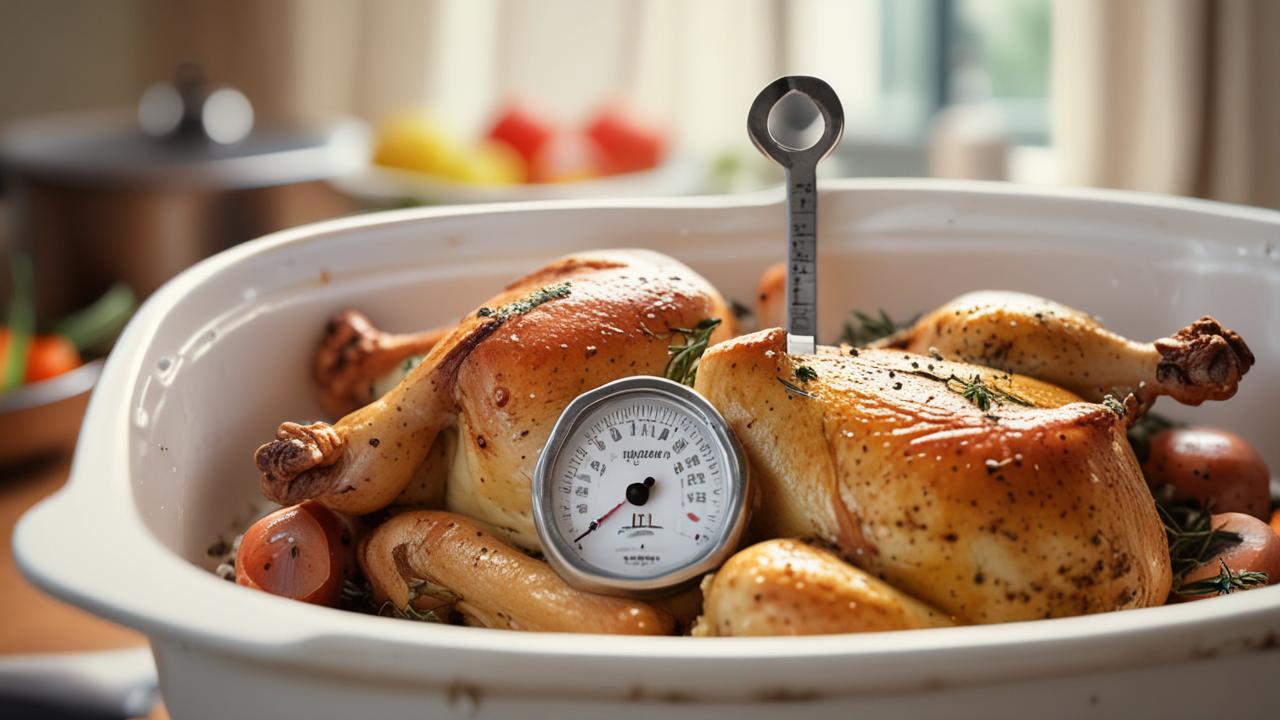
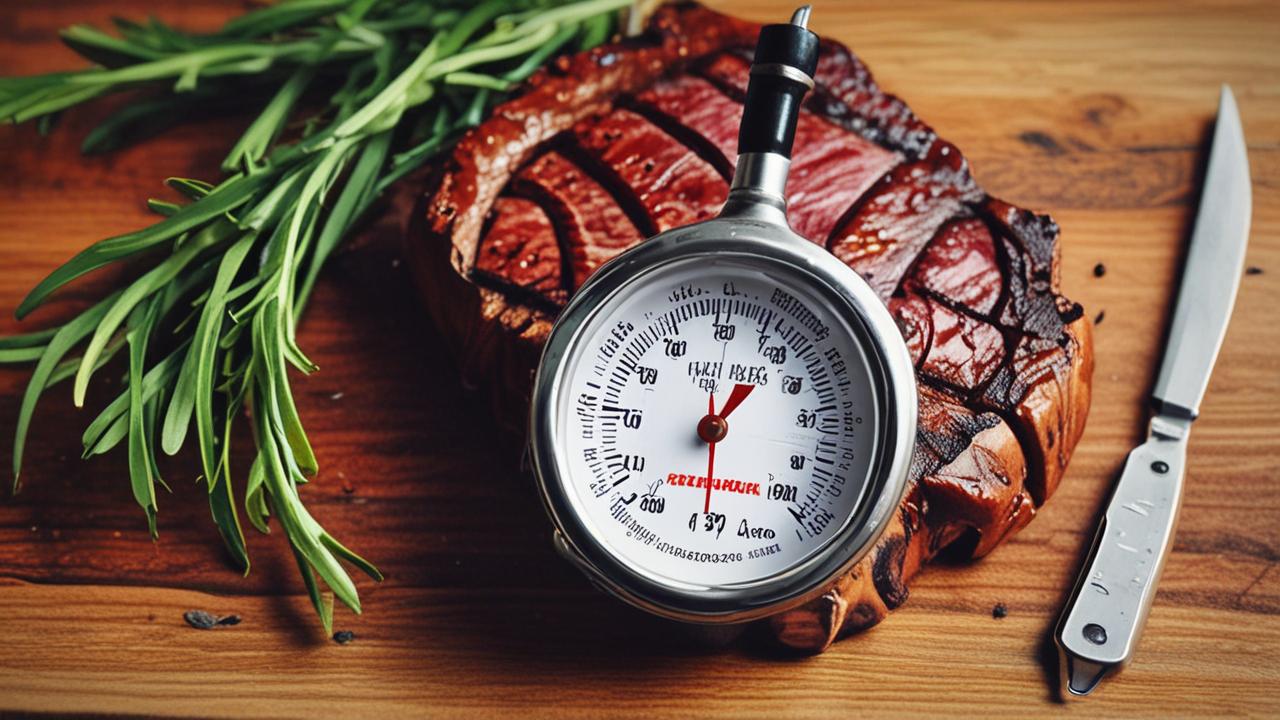
For example, when cooking a whole chicken, aim for the thickest part of the thigh, away from the bone. For a steak, put the probe in the center. If you’re cooking a roast, find the deepest part in the middle.
-
Clean the Probe
Sometimes, food residue on the probe can affect its ability to read the temperature accurately. Clean the probe thoroughly with warm, soapy water and dry it completely before use. Make sure there’s no gunk stuck in the sensor area, which is usually at the tip.
A clean probe ensures direct contact with the food’s juices and heat. Any obstruction can create an insulating layer, leading to a false reading. Think of it like trying to hear someone talking through a pillow – the message gets muffled.
-
Allow the Thermometer to Acclimatize
If you’re moving your thermometer from a cold environment (like outside) to a warm one (like your kitchen), or vice versa, give it a few minutes to adjust. Also, when you first insert it into hot food, wait for the reading to stop changing before you record the temperature. This gives the sensor time to react to the new heat level.
This is especially important for instant-read thermometers. They are designed to be quick, but they still need a moment to get an accurate reading. Rushing the process can lead to a temperature that’s still on its way up or down.
-
Check for Damage
Carefully inspect the probe for any bends, kinks, or visible damage. If the probe is bent severely, it might not be able to get into the meat properly to get an accurate reading. If you see any damage, especially to the part that goes into the food, it might be time to replace the thermometer.
A damaged probe can also be a safety hazard, as the insulation might be compromised. If it looks compromised or feels loose, don’t risk using it. Your food safety is the top priority.
Understanding Different Types of Meat Thermometers
Not all meat thermometers are created equal. Knowing the differences can help you choose the right one and understand its quirks. Each type has its own way of working and potential issues.
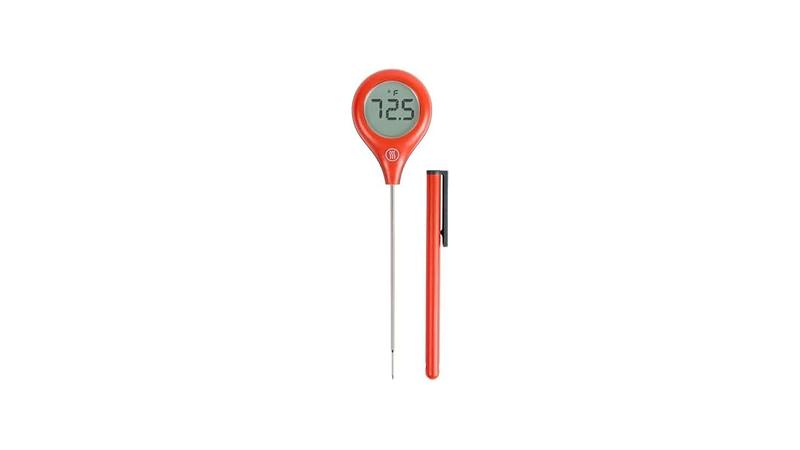
Digital Instant-Read Thermometers
These are very popular because they give a fast reading, often in just a few seconds. They have a digital display that shows the temperature clearly. Most have a thin probe that you insert into the meat.
How they work: They use a thermistor or thermocouple to measure heat. When the probe heats up, it changes the electrical resistance, and the thermometer converts this to a digital temperature reading. They are powered by batteries.
Pros: Quick, easy to read, often very accurate when new and well-maintained.
Cons: Require batteries, can be sensitive to drops, probe can be damaged.
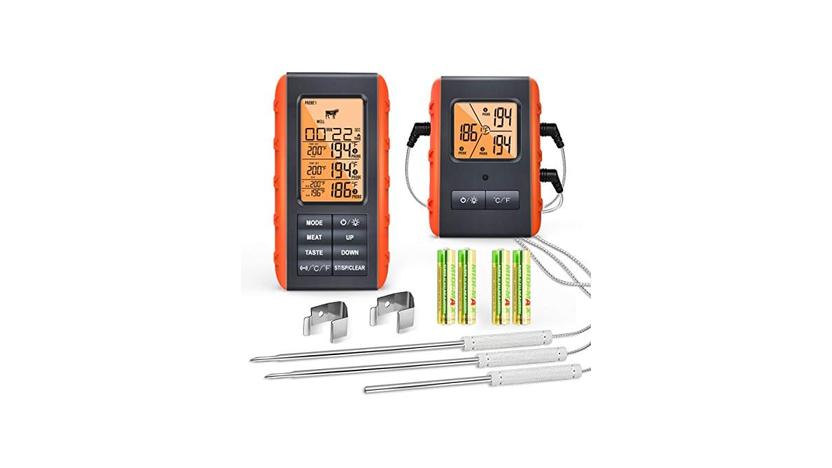
Oven-Safe Probe Thermometers (Digital & Analog)
These thermometers have a probe that stays in the meat while it cooks, and a wire that runs out of the oven to a display unit. This lets you check the temperature without opening the oven door, which helps maintain oven temperature.
How they work: Similar to instant-read digital thermometers, they use heat sensors. Analog versions use a bimetallic strip that bends with heat to move a needle on a dial.
Pros: Great for long cooks (roasts, turkeys), allows for remote monitoring, reduces oven temperature fluctuations.
Cons: Wire can be delicate, analog versions can be harder to read and less accurate than digital, require batteries (digital).
Meat Thermometer Showing Wrong Temperature: Common Issues
No matter the type, issues can arise. For digital ones, it’s often batteries or calibration. For analog, it might be that the needle is bent or the internal spring has lost its tension over time, making it less precise.
Also, if the thermometer is exposed to extreme temperatures for too long, the internal components can be damaged, leading to inaccurate readings.
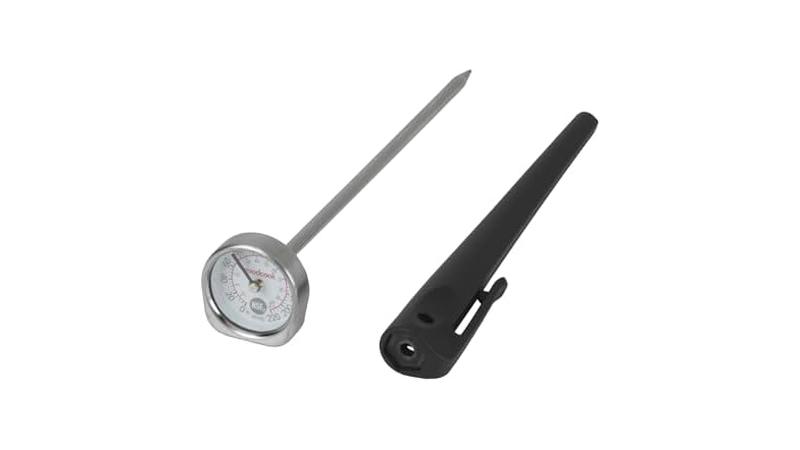
Dial (Analog) Thermometers
These are the older style with a round dial and a needle. They don’t need batteries. You stick the probe into the meat, and the needle points to the temperature on the dial.
How they work: They typically use a bimetallic strip. This is made of two different metals bonded together. When heated, the metals expand at different rates, causing the strip to bend.
This bending movement is connected to a needle that shows the temperature.
Pros: No batteries needed, generally durable, can be cheaper.
Cons: Slower to read, can be harder to read accurately (especially if the dial is small or cluttered), may not be as precise as digital, can be affected by a bent needle or internal mechanical issues.
Infrared (No-Contact) Thermometers
These thermometers measure the surface temperature of food without touching it. You point them at the food, and they give a reading.
How they work: They measure the infrared energy emitted by the surface of an object. All objects emit infrared radiation, and the thermometer detects this energy and converts it into a temperature reading.
Pros: Very fast, no contamination risk, good for checking surface temps of grilled or fried foods.
Cons: Only measure surface temperature, not internal; can be affected by steam, grease, or surface moisture; accuracy depends on the surface emissivity.
An example of when an infrared thermometer is useful is checking the temperature of a pizza stone before placing a pizza on it, or quickly checking the crust temperature of bread.
Statistics on Thermometer Use
A survey found that about 65% of home cooks use a meat thermometer regularly. However, a significant portion (around 30%) reported experiencing issues with their thermometer readings at least once a year. This highlights how common Meat Thermometer Showing Wrong Temperature can be.
Another study indicated that approximately 40% of home cooks who don’t use a thermometer admit it’s because they “don’t know how” or “aren’t sure if it’s working correctly.” This shows a need for simple, clear guidance on thermometer use and troubleshooting.
Maintaining Your Thermometer for Accuracy
To keep your meat thermometer working correctly and avoid the frustration of incorrect readings, a little bit of care goes a long way. Proper maintenance ensures that it’s always ready to give you the most accurate temperature possible.
-
Regular Cleaning:
Always clean your thermometer after each use. Use warm, soapy water and a soft cloth. For digital thermometers, ensure the probe is dry before storing.
Avoid putting digital thermometers in the dishwasher, as this can damage the electronics.
For analog thermometers, you can often clean the probe with a damp cloth and dry it. Make sure no food particles are left behind, as they can interfere with temperature readings over time.
-
Proper Storage:
Store your thermometer in a clean, dry place. Many digital thermometers come with a protective sheath for the probe, which is ideal for storage. This prevents accidental damage to the probe and keeps it clean.
Avoid storing it in a drawer with sharp objects that could scratch or bend the probe. If you have an oven-safe thermometer, make sure the wire is not kinked or pinched when stored.
-
Battery Replacement (Digital):
For digital thermometers, keep an eye on the battery life. If the display starts to dim or readings become erratic, it’s time for new batteries. Using high-quality batteries can also ensure a longer and more stable performance.
It’s a good idea to replace the batteries every 6-12 months, even if you haven’t noticed any issues, just to be safe. This proactive approach can prevent you from encountering a Meat Thermometer Showing Wrong Temperature situation at a critical cooking moment.
-
Periodic Accuracy Checks:
As we discussed, performing the ice water test (32°F / 0°C) every few months, or if you suspect an inaccurate reading, is a smart practice. This quick check can catch calibration drifts or other issues before they cause a cooking disaster.
For oven-safe thermometers, you might also want to check the accuracy of the display unit separately if possible, though usually, the probe is the main sensor.
-
Handle with Care:
Meat thermometers, especially digital ones, can be delicate. Avoid dropping them. If an analog thermometer’s needle is knocked out of place, it might need recalibration or repair, and sometimes replacement is the most practical option.
Treat your thermometer like any other precision tool. Gentle handling will ensure its longevity and continued accuracy.
When to Consider a New Thermometer
Sometimes, despite your best efforts, a thermometer just reaches the end of its useful life. Recognizing these signs can save you from food safety risks and disappointing meals.
-
Inconsistent Readings:
If your thermometer gives wildly different readings within a short period, or if it fails the ice water test by a significant margin and cannot be calibrated, it’s likely unreliable. For instance, if it reads 40°F one minute and 60°F the next when stuck in the same piece of meat, it’s a red flag.
Inconsistent readings are a major indicator that the internal components are failing. This makes it impossible to trust for accurate food preparation, especially for meats that need to reach specific safe temperatures.
-
Physical Damage:
If the probe is bent, cracked, or the display screen on a digital thermometer is damaged or unreadable, it’s time for a replacement. A bent probe might not reach the center of thick meats, and a cracked screen makes it impossible to see the temperature.
Physical damage can also compromise the thermometer’s ability to function correctly. For example, a crack in the probe casing could allow moisture to seep in, affecting the sensor.
-
Slow or Non-Existent Readings:
If your thermometer takes an unusually long time to provide a reading, or if it simply shows dashes or an error message, it might be malfunctioning. Instant-read thermometers should give a reading within a few seconds.
A thermometer that fails to register a temperature could have a dead battery, a faulty sensor, or a connection issue. In any case, it’s no longer a useful tool for cooking.
-
Age and Wear:
Even well-maintained thermometers have a lifespan. If your thermometer is many years old and has been used frequently, its accuracy may have naturally degraded over time. Analog thermometers, in particular, can lose their calibration and become less precise with age.
Think of it like any electronic device; components wear out. If you’ve had a thermometer for a decade and it’s starting to seem “off,” investing in a new one is a wise choice for both accuracy and peace of mind.
Choosing a Reliable Thermometer
When you’re looking for a new thermometer, consider what you cook most often. For everyday use, a good digital instant-read thermometer is excellent. If you do a lot of roasting, an oven-safe probe thermometer is a great investment.
Read reviews from other users to see if a particular model is known for its accuracy and durability. Look for thermometers with clear displays and easy-to-use controls. Don’t be afraid to spend a little more on a quality thermometer; it can make a big difference in your cooking results and food safety.
Food Safety and Thermometer Use
Using a meat thermometer correctly is more than just about getting your food to taste good; it’s a critical aspect of food safety. A thermometer is your best defense against foodborne illnesses caused by undercooked meats.
Safe Internal Temperatures
Different types of meat need to reach different internal temperatures to be safely eaten. These temperatures kill harmful bacteria like Salmonella and E. coli.
Here’s a quick guide:
| Meat Type | Minimum Safe Internal Temperature | Notes |
|---|---|---|
| Ground Meats (Beef, Pork, Lamb) | 160°F (71°C) | Must be cooked thoroughly. |
| Poultry (Chicken, Turkey, Duck) – whole or ground | 165°F (74°C) | Includes breast, thigh, and ground poultry. |
| Beef, Pork, Lamb, Veal (Steaks, Roasts, Chops) | 145°F (63°C) with a 3-minute rest time | Medium-rare. Can be cooked to higher temperatures for well-done. |
| Fish | 145°F (63°C) | Flesh should be opaque and separate easily with a fork. |
| Casseroles and Leftovers | 165°F (74°C) | Must be reheated thoroughly. |
Always use a thermometer to check the temperature in the thickest part of the meat, away from bone or fat. After removing meat from the heat source, let it rest for a few minutes. This “carryover cooking” allows the internal temperature to continue to rise slightly and the juices to redistribute, making the meat more tender and flavorful.
Food Safety Statistics
The Centers for Disease Control and Prevention (CDC) reports that millions of cases of foodborne illness occur each year in the United States. A significant percentage of these illnesses are linked to undercooked meats. Using a food thermometer correctly can reduce this risk by ensuring food is cooked to a safe temperature.
Studies have shown that when home cooks use a thermometer, the likelihood of serving undercooked meat drops by over 70%. This emphasizes the thermometer’s role as a vital tool for preventing sickness in your home.
Common Pitfalls in Food Safety Thermometer Use
Even with a reliable thermometer, mistakes can happen. Understanding these common errors can help you avoid them:
-
Not Resting the Meat:
As mentioned, resting meat after cooking is crucial. If you check the temperature immediately after taking it off the heat and it’s slightly below the target, you might think it’s not done. Resting allows the temperature to climb to the safe level naturally and helps keep the meat moist.
For a steak cooked to 140°F (60°C), letting it rest for 5-10 minutes can bring the internal temperature up to 145°F (63°C) or slightly higher, achieving both safety and desired doneness.
-
Only Checking One Spot:
Especially with larger cuts of meat or poultry, the temperature can vary in different parts. Always check the thickest part, but if you’re concerned, check a couple of spots to be sure. This is particularly important for whole birds or large roasts.
For example, a turkey breast might cook faster than the thigh. Checking both areas ensures the entire bird is safe to eat.
-
Using a Thermometer for Surface Temp Only:
Infrared thermometers are great for checking surface conditions, but they don’t tell you if the inside of the meat is cooked. Always use a probe thermometer for internal temperature readings, especially for raw meats and poultry.
You might use an infrared thermometer to see if your grill grates are hot enough, but then switch to a probe thermometer to check the doneness of your burger.
-
Not Calibrating Regularly:
As we’ve covered, a thermometer that isn’t calibrated accurately is useless for food safety. If you don’t test and calibrate your thermometer regularly, you might be serving food that is either undercooked or overcooked, both of which are undesirable.
The simple ice water test takes less than a minute and can prevent foodborne illness. Make it a routine part of your cooking preparation.
Thermometer Use in Different Cooking Methods
The way you cook your food can affect how you use your thermometer.
-
Grilling:
For grilled items like steaks, burgers, or chicken breasts, an instant-read thermometer is perfect. You can quickly check the internal temperature without letting too much heat escape the grill. Make sure to insert the probe into the center of the thickest part.
Example scenario: You’re grilling burgers. You flip them and then use your instant-read thermometer to check the center of one. If it reads 160°F (71°C), they are safe and ready to serve.
-
Roasting:
Roasts and whole poultry benefit most from an oven-safe probe thermometer. You can leave the probe in the meat throughout the entire cooking process. The display unit sits outside the oven, so you can monitor the temperature without opening the door.
This is key for maintaining a consistent oven temperature.
Example scenario: You’re roasting a pork loin. You insert the probe, set the alarm for 145°F (63°C) plus a rest time, and let it cook. The alarm will let you know exactly when it’s reached the perfect temperature.
-
Slow Cooking/Smoking:
For long cooking processes like smoking or using a slow cooker, the same principles apply. An oven-safe probe thermometer is ideal for monitoring the internal temperature of large cuts of meat. This ensures that the meat is slowly cooked to a safe and tender temperature without drying out.
Example scenario: You’re smoking a brisket for 12 hours. Your probe thermometer stays in the brisket the whole time, allowing you to track its progress and ensure it reaches the safe temperature without overcooking.
Frequently Asked Questions
Question: My digital thermometer reads 50°F in ice water. What should I do?
Answer: If your digital thermometer reads 50°F in ice water and it’s supposed to be 32°F, it’s significantly off. First, try changing the batteries. If that doesn’t help, consult your thermometer’s manual to see if it has a calibration function.
If it doesn’t, or if calibration doesn’t fix the issue, the thermometer may need to be replaced as its sensor might be faulty.
Question: How often should I calibrate my meat thermometer?
Answer: It’s a good idea to calibrate your meat thermometer at least every few months, or any time you suspect it’s not giving accurate readings. If you drop your thermometer or expose it to extreme temperatures, it’s wise to test and calibrate it afterward. Regular checks prevent surprises with your cooking.
Question: Can the type of meat affect the thermometer reading?
Answer: Yes, in a way. Fat and bone conduct heat differently than muscle tissue. If the thermometer probe is placed too close to a bone or a large piece of fat, it will read a different temperature than the actual internal temperature of the meat.
Always aim for the thickest part of the muscle tissue, away from bones and excessive fat.
Question: My analog thermometer needle is stuck. What can I do?
Answer: If the needle on your analog thermometer is stuck or moves erratically, it often means the internal mechanism is damaged or has lost its calibration. For minor issues, sometimes gently tapping the thermometer can help. However, if it’s significantly stuck or inaccurate, it’s usually best to replace it, as analog thermometers can be difficult to repair.
Question: Is it okay to use a thermometer that’s a little bit off, like 5 degrees?
Answer: For general cooking, a small difference of 5 degrees might not be critical. However, for food safety, especially with meats that need to reach precise temperatures like poultry or ground meats, accuracy is very important. Even a few degrees can make a difference in killing harmful bacteria.
It’s best to use a thermometer that you trust is accurate.
Wrap Up
Seeing a Meat Thermometer Showing Wrong Temperature is common, but easily fixed. By checking batteries, calibrating, and placing the probe correctly, you can trust your thermometer again. Keep it clean and handle it with care for accurate cooking and safe meals every time.