If you’re new to cooking or grilling, you might run into a confusing issue where your meat thermometer seems to show temperatures that jump around a lot. It can be puzzling when the number you see one second is different the next, making it hard to know when your food is just right. Don’t worry, this is a common hiccup for many beginners, and there’s usually a simple fix.
We’ll walk you through exactly how to solve the Meat Thermometer Temperature Jumping Fix so you can cook with confidence. Get ready to learn what’s causing those wild readings and how to get steady, accurate results every time.
Understanding Your Meat Thermometer and Common Issues
Meat thermometers are super helpful tools for anyone who wants to cook meat perfectly. They help you make sure that chicken is cooked all the way through, or that your steak is just how you like it, without guessing. When a thermometer’s reading jumps around, it’s like getting mixed signals about your food’s temperature.
This can lead to undercooked or overcooked meals, which nobody wants. This section will explain how these thermometers work in simple terms and why those jumpy readings happen.
How Meat Thermometers Work
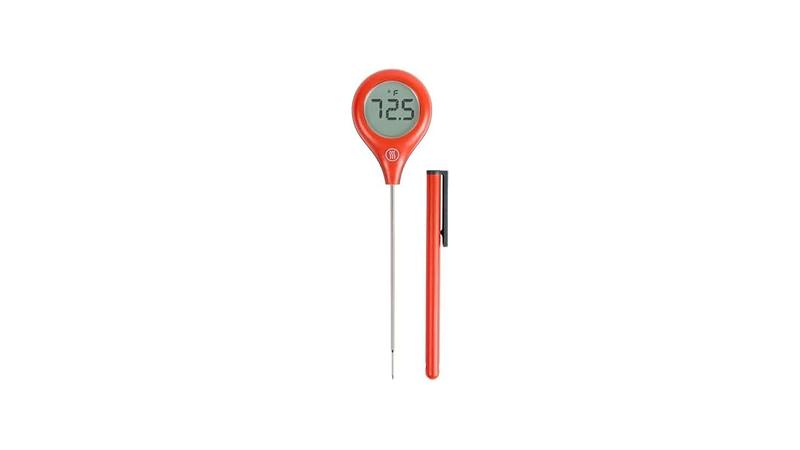
At its core, a meat thermometer measures heat. Most digital meat thermometers use a small sensor, often a thermocouple or a thermistor, located at the tip of the probe. When this probe is inserted into food, it detects the heat energy present in the meat.
This energy causes a change in the electrical resistance or voltage of the sensor. The thermometer’s internal circuitry then reads this change and converts it into a temperature reading, usually displayed in degrees Fahrenheit or Celsius on a small screen.
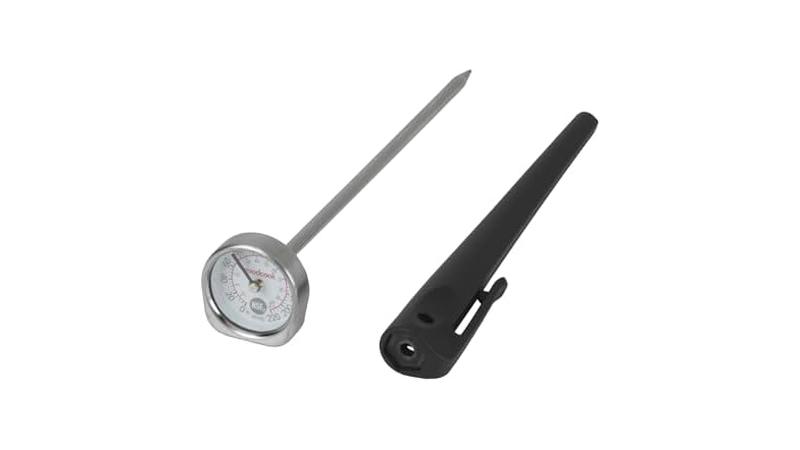
Think of it like this: hotter food has more energy, and this extra energy affects the tiny parts inside the thermometer’s probe. The thermometer then translates that effect into a number you can see. For analog thermometers, a bimetallic strip works differently.
It’s made of two different metals that expand at different rates when heated. This causes the strip to bend, and this bending motion is connected to a needle on a dial, showing the temperature. Both types aim to give you a quick snapshot of the internal heat of your food.
Why Temperature Readings Can Jump
Several things can make a meat thermometer’s temperature seem to jump. One of the most common reasons is the placement of the probe. If the probe touches a hot spot, like a piece of fat or a bone, it will read a much higher temperature than the actual meat around it.
Bones conduct heat differently than muscle tissue, and fat can be hotter or cooler than the lean meat. Another factor is the meat itself. Meat isn’t uniformly hot throughout; there can be cooler spots and hotter spots, especially during cooking.
Also, the cooking environment can play a role. If you’re opening the oven or grill door frequently, or if there are drafts, the temperature around the meat can fluctuate. This can affect how quickly the thermometer registers changes.
Sometimes, the thermometer itself might be sensitive to these rapid changes, or its internal components might need a moment to stabilize. If the thermometer is not properly calibrated or has been dropped, its readings can become unreliable. Even the type of meat and how it’s structured can lead to small variations in temperature readings.
Common Causes for Temperature Instability
- Probe Placement: The most frequent culprit is touching something that’s hotter or cooler than the meat itself. This includes bone, thick pockets of fat, or even hitting the bottom of a pan or grill grate.
- Meat Inhomogeneity: Different parts of the meat cook at different rates. Muscle fibers, fat distribution, and moisture content can all create small temperature variations within the same cut.
- Environmental Fluctuations: Opening an oven or grill door lets out heat and lets in cooler air, causing quick shifts in temperature that the thermometer might try to track.
- Thermometer Sensitivity: Some thermometers are more sensitive than others. They might react quickly to slight changes, making the numbers seem to “jump” rather than steadily climb.
- Calibration Issues: If a thermometer isn’t calibrated correctly or has been exposed to extreme temperatures or physical shock, its readings can become erratic.
When the probe hits a piece of bone, for example, it’s directly measuring the heat of the bone, which can be significantly hotter or cooler than the surrounding muscle. Fat also behaves differently; it can render and melt, changing its temperature rapidly. So, a reading of 180°F when the rest of the meat is at 150°F might simply mean the probe is touching a large, hot piece of fat.
Learning to identify these situations is part of mastering your thermometer.
Achieving Stable Readings: Practical Tips
Getting steady and accurate temperature readings from your meat thermometer is about more than just to put the probe for the best results and how to interpret the readings you get. This section will offer straightforward advice you can use right away to make your thermometer much more reliable.
We’ll cover where to insert the probe, how to handle different types of meat, and what to do if the reading still seems a bit off.
Strategic Probe Placement for Accuracy
The key to a stable temperature reading lies in where you insert the thermometer probe. You want to find the thickest part of the meat, away from any bones, fat pockets, or gristle. For larger cuts like roasts or whole poultry, aim for the center of the thickest muscle.
For steaks or chops, insert the probe into the side, halfway up the thickness. Avoid touching the pan or grill surface, as this will give you a false reading of the food’s internal temperature.
When cooking poultry, like a whole chicken or turkey, the thigh is usually the best place to check the temperature, as it’s a denser muscle and takes longer to cook than the breast. For ground meat patties, insert the probe through the side of the patty. If you’re cooking multiple items, check the one that will take the longest to cook.
Remember, the goal is to measure the internal temperature of the muscle tissue, not the surrounding components.
Best Practices for Inserting the Probe
- Find the Thickest Part: Always aim for the meatiest section of the cut. This ensures you’re measuring the area that takes the longest to cook and is most likely to be undercooked if not properly heated.
- Avoid Bones and Fat: Bones conduct heat differently than meat, and large fat deposits can have different temperatures. Keep the probe centered in the lean muscle.
- Insert Straight In: Push the probe directly into the meat. Angling it might lead it to hit a bone or angle towards a cooler or hotter outer edge.
- Check Multiple Spots if Unsure: If you’re dealing with a very uneven cut, take a couple of readings in different thick spots to get a general idea.
- Allow Reading to Stabilize: Once inserted, wait a few seconds for the temperature reading to stop changing. This gives the thermometer time to adjust to the meat’s actual heat.
Imagine cooking a thick pork loin. If you it’s thinner or contains a large seam of fat, you might get a reading that suggests it’s done when the center is still raw. By finding the absolute center of the thickest part, you get a much more reliable indicator of overall doneness.
Handling Different Cuts and Cooking Methods
Different types of meat and different ways of cooking can influence temperature readings. For example, thinner cuts like chicken breasts or fish fillets cook very quickly. You need to be fast and accurate with your temperature checks.
For thick cuts, like a beef roast or a whole ham, you need patience, as the heat needs time to penetrate to the center.
When grilling, especially over high heat, the surface temperature can be much hotter than the inside. Your thermometer helps you see through this. If you’re smoking meat, the cooking process is slow and low, meaning the temperature changes gradually.
In this case, a steady, slow climb in temperature is expected, and sudden jumps might indicate a problem with the thermometer or where it’s placed.
Adapting to Cooking Styles
- Quick Cooking (e.g., Steaks, Fish): Insert the probe quickly and check after the expected cooking time. Be ready to remove the food as soon as it reaches the target temperature to prevent overcooking.
- Slow Cooking (e.g., Roasts, Pulled Pork): Monitor the temperature over a longer period. You expect a gradual, steady increase. If it jumps suddenly, re-check the probe placement.
- Grilling: Be aware of flare-ups and direct heat. If the probe is too close to the heat source, it could get a falsely high reading. Ensure it’s in the thickest, most protected part of the meat.
- Smoking: This method involves long cooking times at low temperatures. The internal temperature will rise slowly and steadily. Any significant jump could be an anomaly worth investigating by repositioning the probe.
- Deep Frying: For items like turkey, ensure the probe is submerged in the meat and not touching the hot oil or the bottom of the fryer pot.
Consider cooking a thick salmon fillet versus a rack of ribs. The salmon needs a precise temperature check at the end to ensure it’s flaky and moist. The ribs, cooked low and slow, will show a steady temperature rise over several hours.
For the salmon, a jumpy reading near the target temperature might mean you need to pull it off the heat immediately. For ribs, you might just be seeing minor fluctuations as the probe heats up or cools down slightly.
Troubleshooting a Jumpy Thermometer
If you’ve tried careful placement and are still seeing wild temperature swings, it might be time to troubleshoot the thermometer itself. Sometimes, simple things like a dirty probe can affect readings. Other times, the thermometer might need a reset or a battery change.
If it’s an older digital thermometer, its internal components might be starting to wear out.
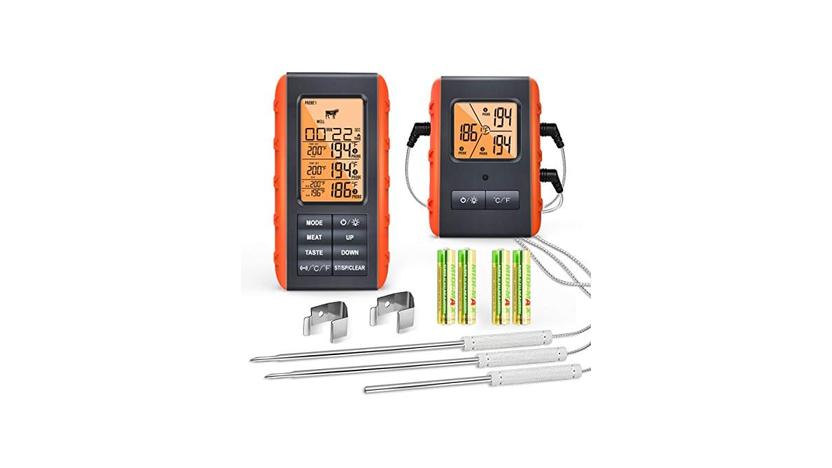
A common fix for digital thermometers is to remove and reinsert the batteries. This can sometimes reset the internal circuitry and clear up any minor glitches. For probe thermometers, ensure the probe is clean and dry before inserting it.
Any residue can conduct heat unevenly. If the thermometer has a detachable probe, check the connection point to make sure it’s secure.
Steps to Fix a Malfunctioning Thermometer
- Clean the Probe: Wash the probe thoroughly with soap and warm water. Dry it completely. Any food residue can affect its ability to sense temperature accurately.
- Check Batteries (Digital): For digital thermometers, remove the batteries for about 30 seconds and then reinsert them. This can often reset the device and resolve minor software issues.
- Test in Ice Water: Fill a glass with ice and water. Stir it well. Insert the probe into the mixture. It should read very close to 32°F (0°C). If it’s far off, the thermometer might be faulty.
- Test in Boiling Water: Boil a small pot of water. Once it’s at a rolling boil, carefully insert the probe. It should read very close to 212°F (100°C) at sea level. Altitude can affect this reading slightly.
- Inspect for Damage: Look for any visible signs of damage to the probe or the display unit. A bent probe or cracked casing could indicate internal problems.
If the ice water and boiling water tests show readings that are significantly off, or if they jump around wildly themselves, it’s a strong sign that the thermometer is no longer accurate. In such cases, the best solution might be to replace it. A reliable thermometer is a small investment that pays off in perfectly cooked food.
The Science Behind Temperature Stability
Understanding why temperatures are stable or jumpy involves a little bit of science. It’s about how heat moves and how sensitive the thermometer is. When we talk about the Meat Thermometer Temperature Jumping Fix, we’re often looking at how quickly heat transfers and how the thermometer’s sensor reacts to those changes.
Heat Transfer and Meat Cooking
Meat cooks through heat transfer. Heat moves from a hotter area to a cooler area. When you cook meat, the heat from your oven, grill, or pan moves into the outer layers first.
This heat then gradually works its way to the center. Different parts of the meat transfer heat at different rates. Bones, being dense, heat up and cool down differently than muscle fibers.
Fat also has different thermal properties, often melting and carrying heat differently.
The process of cooking also involves chemical changes within the meat. Proteins denature, and moisture is lost. These changes affect how heat is stored and transferred.
When a thermometer probe is inserted, it’s measuring the kinetic energy of the molecules in its immediate vicinity. If those molecules are particularly energetic (hot), the thermometer registers a high number. If they are less energetic (cool), it registers a lower number.
Factors Influencing Heat Transfer in Meat
- Thermal Conductivity: This is how well a material transfers heat. Bones have high thermal conductivity, meaning they heat up quickly. Muscle tissue has moderate conductivity, while fat has lower conductivity.
- Specific Heat Capacity: This is the amount of heat needed to raise the temperature of a substance by one degree. Water has a high specific heat capacity, and since meat is mostly water, it takes a significant amount of heat to raise its temperature.
- Moisture Content: Water absorbs and releases heat efficiently. Meat with higher moisture content will heat more evenly and predictably than dry meat.
- Meat Density: Denser cuts of meat will take longer for heat to penetrate to the center.
Imagine trying to heat a thick steak. The outside gets hot very quickly from the grill. This heat needs time to travel inwards.
If your thermometer is in the very center, it will read cooler for a while. If it’s near the surface, it will read hotter. The goal is to find the point where the whole steak has reached a safe and desired temperature, which is typically the center.
Thermometer Response Time and Accuracy
The speed at which a thermometer updates its reading is called its response time. Some thermometers are very fast, showing changes almost instantly. Others take a few seconds to catch up.
When cooking, the temperature of the meat is not perfectly steady; it can fluctuate slightly. A fast-responding thermometer might pick up on these minor fluctuations, making the temperature appear jumpy.
Accuracy is also key. A thermometer that is not properly calibrated or has been damaged might consistently read too high or too low, or its readings might be unstable. The quality of the sensor and the internal electronics play a big role in how consistently and accurately a thermometer reports temperature.
Understanding Thermometer Performance
- Response Time: Faster thermometers give you more real-time data, but can sometimes seem jumpy if the meat’s temperature is slightly uneven. Slower thermometers might miss small, rapid fluctuations.
- Calibration: This is how a thermometer is set to match known temperatures. If it’s out of calibration, all readings will be off.
- Sensor Type: Thermocouples are generally faster and more accurate than thermistors, but both can be reliable when of good quality.
- Ambient Temperature Effects: Extreme ambient temperatures can sometimes affect the performance of sensitive electronic thermometers.
For example, a high-end instant-read thermometer might show a reading of 150°F, then 152°F, then 151°F within a few seconds. This is normal variation and indicates the thermometer is working well. However, if it jumps from 150°F to 170°F and back to 155°F in the same short period, that’s a sign of a problem, likely related to probe placement or a faulty thermometer.
Case Study: The Backyard BBQ Grill Master
John, an avid backyard griller, often faced the issue of his digital meat thermometer showing erratic readings on his thick-cut steaks. He would insert it into the thickest part, but one moment it would read 130°F, and the next it would jump to 145°F, then back to 135°F. This made him hesitant to trust the thermometer and often led to steaks that were either undercooked or overcooked as he tried to guess based on the readings.
After reading up on thermometer use, John learned about the importance of avoiding bones and thick fat pockets. He realized that on some of his steaks, there were small, dense fat caps or small bone fragments near the surface. He adjusted his technique to ensure the probe went into the center of the lean muscle, well away from these areas.
He also made sure to let the thermometer settle for at least 10-15 seconds before taking a reading.
The results were transformative. His thermometer readings became much more stable, showing a gradual increase in temperature as the steak cooked. He could now confidently target his desired doneness, whether medium-rare or medium, knowing that the temperature reading was accurate.
John reported that his steaks were consistently cooked perfectly, and he no longer wasted food due to temperature guesswork.
Real-World Scenarios and Solutions
Let’s look at a couple of everyday cooking situations where a jumpy thermometer can cause problems, and see how to fix them. These examples show how understanding the basics can make a big difference in your cooking success.
Scenario 1: The Overcooked Roast Chicken
Sarah was roasting a whole chicken for Sunday dinner. She inserted her meat thermometer into the thickest part of the thigh, but the temperature kept fluctuating wildly. One minute it read 160°F, then it would jump to 185°F, then down to 170°F.
Confused and worried about safety, she kept cooking, thinking it was taking too long to reach a stable, safe temperature. By the time she decided it was finally done, the chicken was dry and tough, especially the breast meat.
Sarah later realized her mistake. She had inserted the probe at an angle and it had likely hit a bone or a thick, fatty piece of skin near the bone. Bones conduct heat differently than meat, and thick fat can get very hot.
Because she trusted the jumpy readings and kept cooking, she overcooked the entire chicken. If she had repositioned the probe to be in the center of the thickest muscle of the thigh, away from the bone and thickest fat, she would have gotten a stable reading around 165°F much sooner, resulting in a juicy, perfectly cooked chicken.
Scenario 2: The Undercooked Salmon Fillet
Mark was making pan-seared salmon for a quick weeknight dinner. He used his instant-read thermometer to check the thickest part of the fillet. The temperature seemed to jump around between 120°F and 140°F.
He wasn’t sure if it was done, so he cooked it a little longer. When he finally took it off the heat, the outside was cooked, but the center was still a bit raw and opaque.
Mark’s issue was likely related to the speed of cooking and the sensitivity of his thermometer. Salmon cooks very quickly, and the temperature gradient (difference between outside and inside) can be significant. The slight jumps he saw might have been minor fluctuations as heat transferred.
A better approach would have been to target a specific finishing temperature (like 125-130°F for medium) and remove the salmon from the heat just before it reached that temperature, allowing the residual heat to finish the cooking. For delicate fish, it’s often better to rely on visual cues like flakiness along with a stable, precise temperature reading.
Tips for Success in Common Cooking Tasks
Here are some practical tips to help you get accurate readings for common cooking tasks:
- Roasts (Beef, Pork, Lamb): Aim for the center of the thickest part, avoiding the bone and large fat cap. For a large roast, you might even use a leave-in probe thermometer that connects to an oven-safe unit.
- Whole Poultry (Chicken, Turkey): The thigh is your best bet. Insert the probe into the thickest part of the thigh, making sure not to touch the bone. The breast will cook faster, so the thigh is the most reliable indicator.
- Steaks and Chops: For thicker cuts, insert the probe from the side into the thickest part of the meat. For thinner cuts, you might need to use visual cues more than temperature, or check very quickly at the end.
- Burgers and Ground Meat: Insert the probe through the side of the patty into the center. Be sure to check multiple burgers if they are of different sizes or thicknesses.
- Fish Fillets: Use an instant-read thermometer and check the thickest part. Cook to the desired internal temperature, but remember fish continues to cook after being removed from the heat.
Remember that different cuts and thicknesses will have slightly different cooking times and temperature behaviors. The goal is to build confidence with your thermometer and learn to trust its reliable readings when used correctly. Many modern thermometers come with pre-set temperatures for different types of meat, which can be a helpful starting point.
Frequently Asked Questions
Question: Why is my meat thermometer showing different temperatures when I insert it into the same piece of meat?
Answer: This usually happens because the meat itself has uneven temperatures. Different parts of the meat, like fatty areas or areas near bones, can be hotter or cooler than the lean muscle. Also, your thermometer probe might be hitting a bone or a thick pocket of fat, which will give a skewed reading.
Try to insert the probe into the thickest part of the lean muscle, away from bones and fat, and allow the reading to stabilize.
Question: My digital meat thermometer keeps showing “Err” or “Lo”. What does that mean?
Answer: “Err” often means there’s an error with the thermometer’s readings, possibly a malfunction or a poor connection. “Lo” usually means the temperature detected is too low for the thermometer to register properly, often below its operating range. Check the batteries, ensure the probe is properly connected (if detachable), and try cleaning the probe.
If the issue persists, the thermometer might need replacing.
Question: Can the type of pan or cooking surface affect my thermometer reading?
Answer: Yes, if your thermometer probe is touching the pan or grill grate, it will read the temperature of that surface, which is usually much hotter than the inside of your food. Always make sure the probe is inserted only into the meat and is not making contact with the cooking surface.
Question: How long should I wait for the temperature reading to become stable?
Answer: For most digital instant-read thermometers, you should wait about 5-15 seconds after inserting the probe for the reading to stabilize. Some faster models might stabilize in just a few seconds. If the temperature continues to fluctuate significantly after this initial period, re-check your probe placement.
Question: Is it better to have a meat thermometer that shows temperature changes quickly or slowly?
Answer: A faster response time is generally preferred because it allows you to catch the meat at its perfect temperature without overcooking. However, very fast thermometers might show slight, normal fluctuations in meat temperature, which can be mistaken for an issue. The key is to understand that small, rapid shifts are often normal, while large, erratic jumps indicate a problem.
Final Thoughts
Solving the Meat Thermometer Temperature Jumping Fix is all about smart probe placement and trusting your tool when used correctly. By aiming for the thickest muscle, avoiding bones and fat, and letting the reading settle, you’ll get steady, reliable temperatures. This leads to perfectly cooked food every time.
You’ve got this!