Understanding meat doneness is essential for achieving the perfect balance between flavor, texture, and food safety. While cooking time can vary based on thickness and method, internal temperature is the most reliable way to determine doneness.
This guide explains the different levels of doneness for beef, pork, lamb, and other meats—along with the exact internal temperatures you should target.
Why Doneness Matters
Meat doneness affects:
- Texture (tender vs firm)
- Juiciness
- Flavor development
- Food safety
Using a calibrated meat thermometer ensures precision and consistency, whether you’re grilling, roasting, or smoking.
Beef Doneness Levels
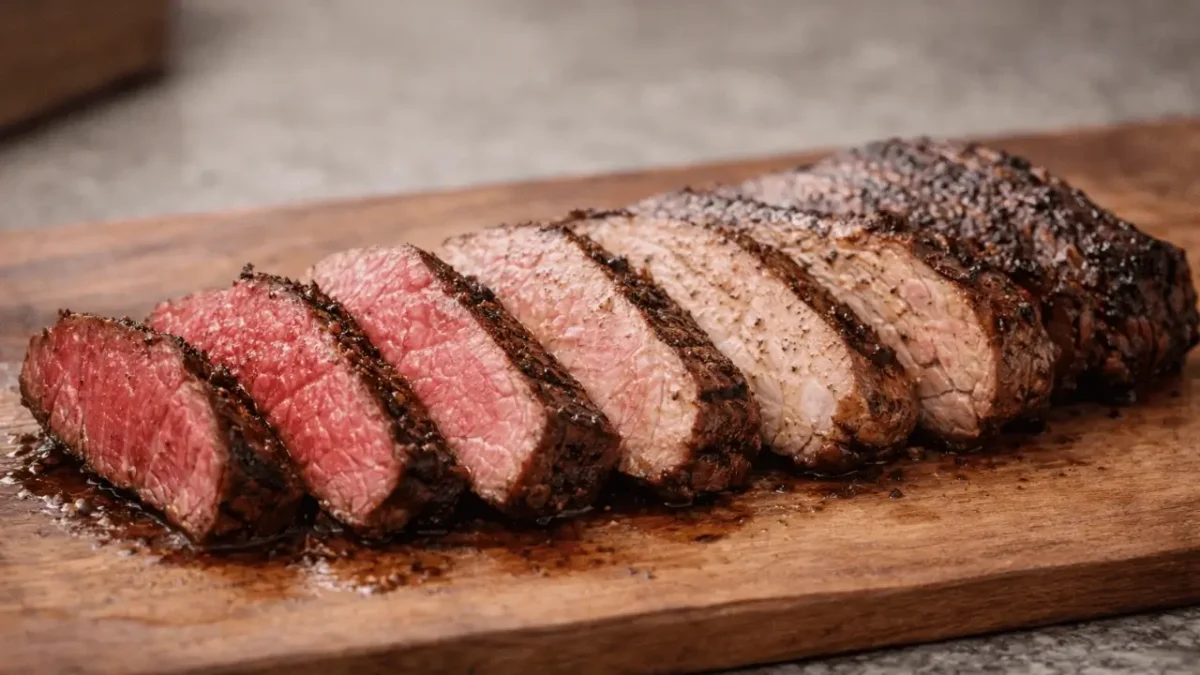
Beef steaks and roasts are most commonly cooked to varying levels of doneness.
Rare
Internal Temperature: 120–125°F (49–52°C)
Appearance: Cool red center
Texture: Very soft and tender
Rare steak retains maximum moisture but has minimal fat rendering.
Medium Rare
Internal Temperature: 130–135°F (54–57°C)
Appearance: Warm red center
Texture: Tender and juicy
This is widely considered the ideal doneness for premium cuts like ribeye or filet mignon.
Medium
Internal Temperature: 140–145°F (60–63°C)
Appearance: Warm pink center
Texture: Firm but still moist
Balanced between tenderness and firmness.
Medium Well
Internal Temperature: 150–155°F (65–68°C)
Appearance: Slight pink center
Texture: Mostly firm
Moisture begins to reduce significantly at this stage.
Well Done
Internal Temperature: 160°F+ (71°C+)
Appearance: Little to no pink
Texture: Firm throughout
At this temperature, most natural juices are cooked out.
Pork Doneness
Modern food safety standards allow pork to be safely consumed at lower temperatures than previously recommended.
Medium (Recommended for Whole Cuts)
Internal Temperature: 145°F (63°C) + 3-minute rest
Appearance: Slight blush pink
Texture: Juicy and tender
Well Done
Internal Temperature: 160°F (71°C)
Ground pork should always reach 160°F.
Lamb Doneness
Lamb follows similar temperature ranges to beef.
- Rare: 125°F
- Medium Rare: 130–135°F
- Medium: 140–145°F
- Well Done: 160°F+
Lamb is typically best enjoyed at medium rare to medium.
Poultry Doneness
Unlike beef or lamb, poultry does not have multiple doneness levels for safety reasons.
- Chicken (all cuts): 165°F (74°C)
- Turkey (all cuts): 165°F (74°C)
There is no safe “medium” level for poultry.
BBQ & Slow-Cooked Meats
Low-and-slow cooking methods require higher internal temperatures for connective tissue breakdown.
- Brisket: 195–205°F
- Pulled Pork: 195–205°F
- Ribs: 190–203°F
At these temperatures, collagen melts, producing tender results.
Resting Time and Carryover Cooking
After removing meat from heat, internal temperature continues to rise by 5–10°F. This is known as carryover cooking.
Recommended resting times:
- Steaks: 5–10 minutes
- Large roasts: 15–20 minutes
- Poultry: 10–20 minutes
Resting allows juices to redistribute evenly.
Visual Cues vs Thermometer Accuracy
Color alone is not a reliable indicator of doneness. Lighting conditions, meat type, and cooking method can affect appearance.
A digital meat thermometer provides accurate, objective measurement and eliminates guesswork.
Quick Reference Chart
Beef Rare: 125°F
Beef Medium Rare: 130–135°F
Beef Medium: 140–145°F
Pork (Whole Cuts): 145°F
Ground Meats: 160°F
Poultry: 165°F
Brisket / Pulled Pork: 195–205°F
Cooking meat to the proper internal temperature ensures both safety and optimal flavor. Whether you prefer rare steak or fully cooked poultry, temperature control is the key to consistent results.
Use this guide as your reference point whenever precision matters in the kitchen or at the grill.