
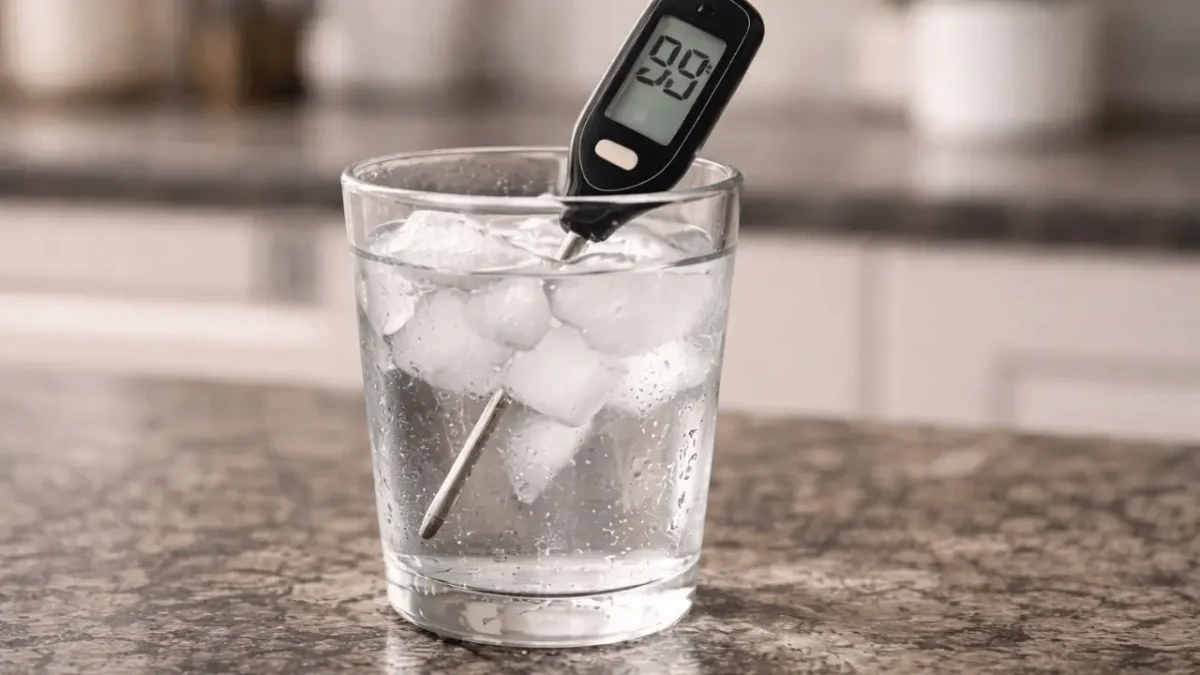
A properly calibrated meat thermometer is essential for accurate cooking and food safety. Even a small temperature error can lead to undercooked poultry or overcooked steak. Over time, thermometers can lose accuracy due to regular use, drops, moisture exposure, or battery changes.
This guide explains when and how to calibrate your meat thermometer using simple, reliable methods.
Why Calibration Matters
An inaccurate thermometer can:
- Show meat as “done” when it is undercooked
- Cause overcooking and dryness
- Lead to food safety risks
- Produce inconsistent cooking results
Calibration ensures your thermometer reads the correct internal temperature.
When Should You Calibrate?
You should calibrate your thermometer if:
- It has been dropped
- It was exposed to extreme heat
- You notice inconsistent readings
- It has not been checked in several months
- You changed the battery (for digital models)
Regular home cooks should test accuracy at least once every few months.
Method 1: Ice Water Test (Most Accurate for Home Use)
This is the simplest and most reliable calibration method.
Step-by-Step Instructions
- Fill a glass with ice cubes.
- Add cold water until the glass is full.
- Stir and let it sit for 1–2 minutes.
- Insert the thermometer probe into the center of the ice water.
- Do not let the probe touch the sides or bottom of the glass.
- Wait 15–30 seconds for the reading to stabilize.
Correct Reading
Your thermometer should read:
32°F (0°C)
If it does not, adjustment is needed.
Method 2: Boiling Water Test
This method checks high-temperature accuracy.
Step-by-Step Instructions
- Bring water to a rolling boil.
- Insert the thermometer probe into the boiling water.
- Avoid touching the pot’s sides or bottom.
- Wait for the reading to stabilize.
Correct Reading
At sea level, boiling water should read:
212°F (100°C)
Note: At higher elevations, boiling temperature decreases slightly. Adjust accordingly.
How to Adjust Your Thermometer
Analog (Dial) Thermometers
Most dial thermometers have a calibration nut under the dial.
- Use a wrench or pliers to hold the nut.
- While the probe is still in ice water (32°F), turn the dial until it reads correctly.
Digital Thermometers
Many digital models cannot be manually calibrated. If the reading is off:
- Check battery condition
- Reset the device (if supported)
- Contact the manufacturer
- Replace the thermometer if the error is significant
Some high-end digital thermometers include built-in calibration settings.
Acceptable Margin of Error
A deviation of ±1–2°F is generally acceptable for home cooking.
If the thermometer is off by more than 3–4°F, replacement is recommended.
Common Calibration Mistakes
- Letting the probe touch the container
- Not waiting long enough for the reading to stabilize
- Using insufficient ice in the ice water test
- Testing in warm tap water instead of true ice water
Precision depends on correct testing technique.
How Often Should You Test Accuracy?
- Casual home use: Every 3–6 months
- Frequent grilling or smoking: Every 1–2 months
- Professional use: Weekly
Regular testing ensures long-term reliability.
Final Thoughts
Temperature accuracy is the foundation of safe and consistent cooking. A quick ice water test takes less than five minutes and can prevent costly mistakes in the kitchen or at the grill.
If your thermometer consistently fails calibration, it may be time to upgrade to a more reliable model. Precision tools deliver precision results.
Always cook by internal temperature—not guesswork.