Safe Cooking Temperatures
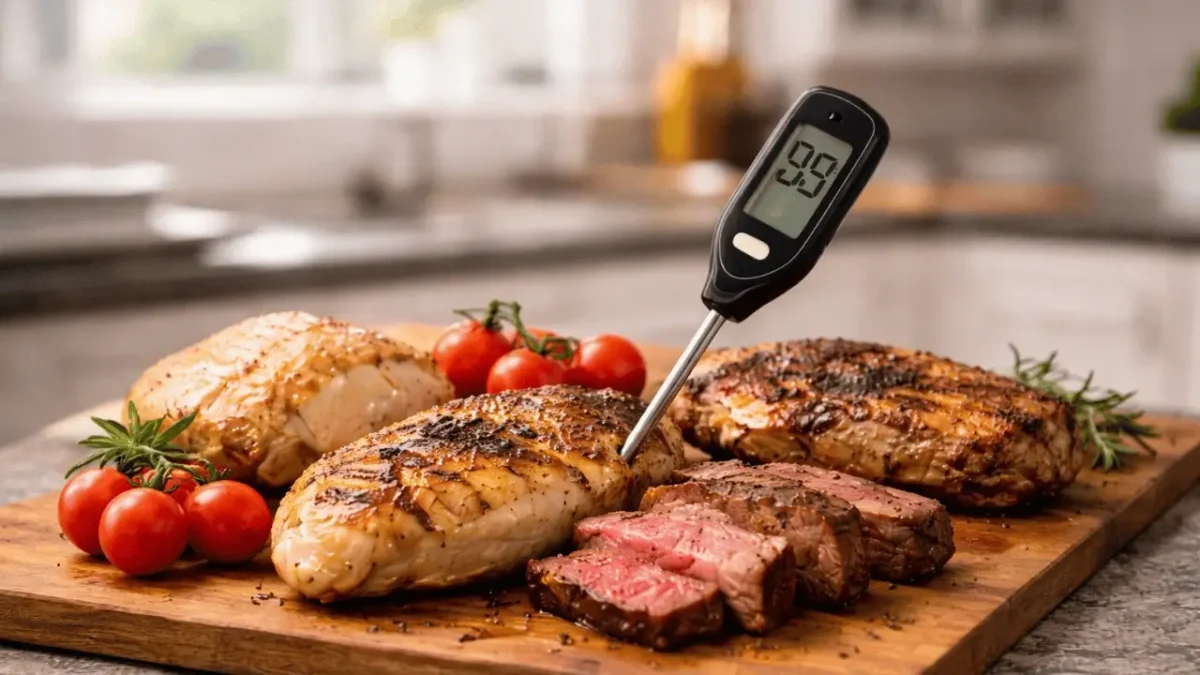
Cooking meat to the proper internal temperature is the most reliable way to prevent foodborne illness. Visual cues such as color or cooking time alone are not accurate indicators of doneness. A calibrated meat thermometer is essential for ensuring both safety and quality.
This guide outlines the USDA-recommended safe minimum internal temperatures for common meats, poultry, and seafood.
Why Safe Cooking Temperatures Matter
Raw meat and poultry may contain harmful bacteria such as:
- Salmonella
- E. coli
- Campylobacter
- Listeria
Proper cooking temperatures destroy these pathogens and significantly reduce the risk of foodborne illness.
Internal temperature — not cooking time — determines safety.
USDA Safe Minimum Internal Temperatures
The following temperatures should be measured at the thickest part of the food using a digital meat thermometer.
Poultry (Chicken & Turkey)
- Whole Chicken: 165°F (74°C)
- Chicken Breast: 165°F (74°C)
- Chicken Thighs/Wings: 165°F (74°C)
- Whole Turkey: 165°F (74°C)
- Ground Chicken or Turkey: 165°F (74°C)
There is no safe lower temperature for poultry.
Beef
- Ground Beef: 160°F (71°C)
- Beef Steaks & Roasts: 145°F (63°C) + 3-minute rest
Ground beef requires a higher temperature because bacteria can be mixed throughout the meat during grinding.
Pork
- Pork Chops / Pork Loin / Pork Roast: 145°F (63°C) + 3-minute rest
- Ground Pork: 160°F (71°C)
Modern pork is safe at 145°F when followed by proper resting time.
Lamb
- Lamb Chops / Roast: 145°F (63°C) + 3-minute rest
- Ground Lamb: 160°F (71°C)
Veal
- Veal Chops / Roast: 145°F (63°C) + 3-minute rest
- Ground Veal: 160°F (71°C)
Ham
- Fresh Ham (raw): 145°F + 3-minute rest
- Pre-cooked Ham (reheat): 140°F
Fish & Seafood
- Fish: 145°F (63°C)
Fish should appear opaque and flake easily with a fork when fully cooked.
Resting Time Explained
For whole cuts of beef, pork, lamb, and veal, allow at least 3 minutes of rest after removing from heat.
Resting allows:
- Temperature stabilization
- Redistribution of juices
- Continued pathogen reduction
Internal temperature may rise 5–10°F during resting (carryover cooking).
BBQ & Slow-Cooked Meats
For tender texture in smoked or slow-cooked meats:
- Brisket: 195–205°F
- Pulled Pork: 195–205°F
- Ribs: 190–203°F
These temperatures are for tenderness, not just safety.
Where to Insert the Thermometer
For accurate readings:
- Insert into the thickest part of the meat
- Avoid touching bone, fat, or gristle
- For poultry, check the innermost thigh and breast
- For burgers or patties, insert into the center
Always wait for the reading to stabilize before removing the probe.
Why Color Is Not Reliable
Meat color can vary due to:
- Cooking method
- Lighting
- Meat type
- Myoglobin content
Ground beef can appear brown before reaching 160°F. Poultry may appear pink even after reaching safe temperature.
Temperature is the only reliable indicator.
Quick Reference Chart
Poultry: 165°F
Ground Meats: 160°F
Beef / Pork / Lamb (Whole Cuts): 145°F + 3 min rest
Fish: 145°F
Additional Food Safety Tips
- Wash hands before and after handling raw meat
- Avoid cross-contamination
- Store meat at proper refrigeration temperatures
- Use separate cutting boards for raw and cooked foods
- Keep hot foods above 140°F and cold foods below 40°F
Final Thoughts
Safe cooking temperatures protect your health and ensure consistent results. A high-quality, properly calibrated meat thermometer removes guesswork and provides precise control over doneness.
Always cook meat to the recommended internal temperature — not based on time, color, or appearance alone.
Precision is the foundation of safe cooking.